Thursday, February 21, 2013

Winter Camping in Southern Utah - Gear Review

Back in August of 2012 I did a gear review from a trip to the Grenadier Mountains in Colorado, and a lot of our readers responded with how much they enjoyed it, so I wanted to share another gear review from a recent trip to the mountains of southern Utah.

Last month, I spent a week backpacking, snowshoeing, rock climbing, and canyoneering through southern Utah. I visited Cedar Breaks above Brian Head, hiked around in the Angel's Landing area in Zion National Park, and camped and climbed in Snow Canyon and Black Rocks just outside of St. George. The weather was pretty nice except for one rainy day, but it was fairly cold the entire week - I think the warmest it got was around 50 on the day we did rock climbing. The first night was below zero at Cedar Breaks, and most other nights were in the 20's, with daytime highs in the 40's.

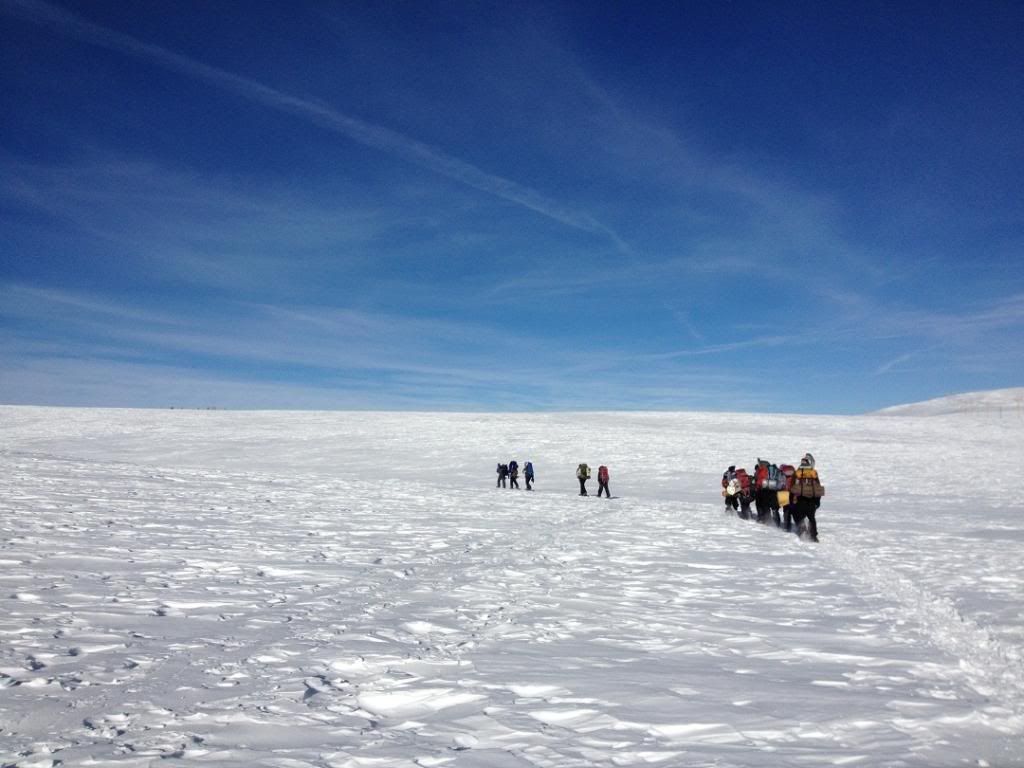
Snowshoeing in Cedar Breaks out to our camp site.

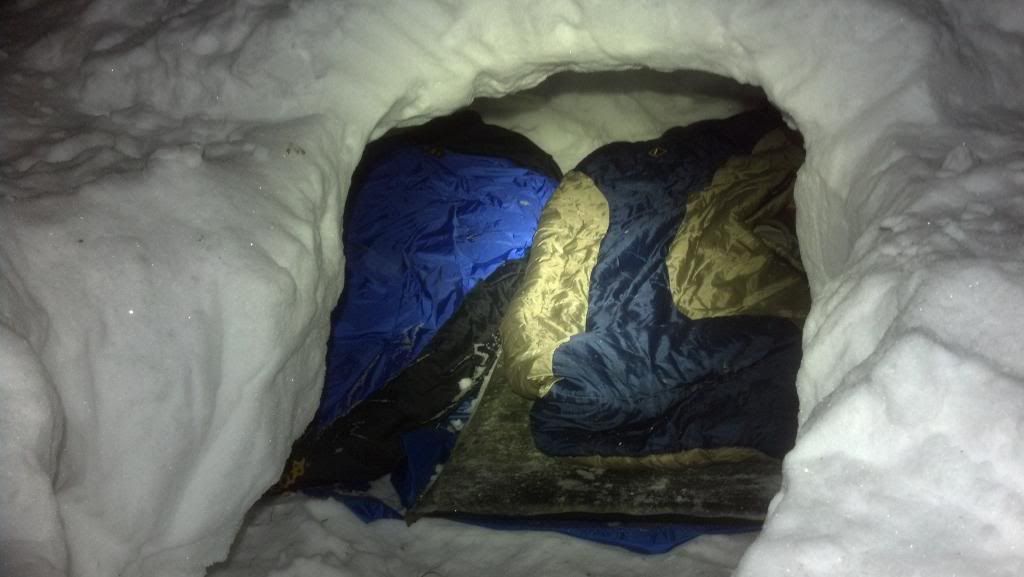
Snow caves the first night.

The final approach to Angel's Landing in Zion National Park.


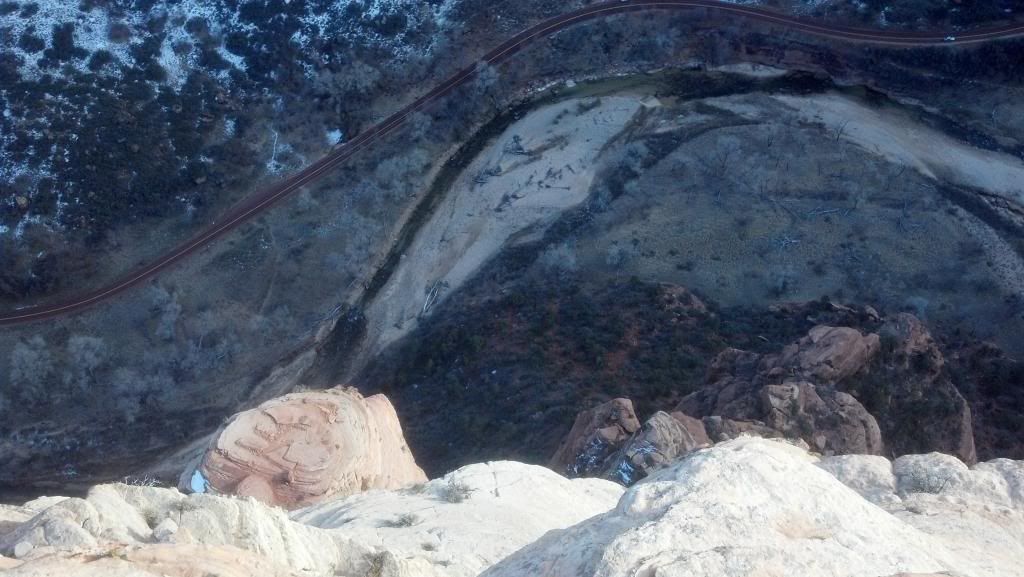
A look over the edge at the top of Angel's Landing - long drop, short stop.


Petrified Dunes in Snow Canyon


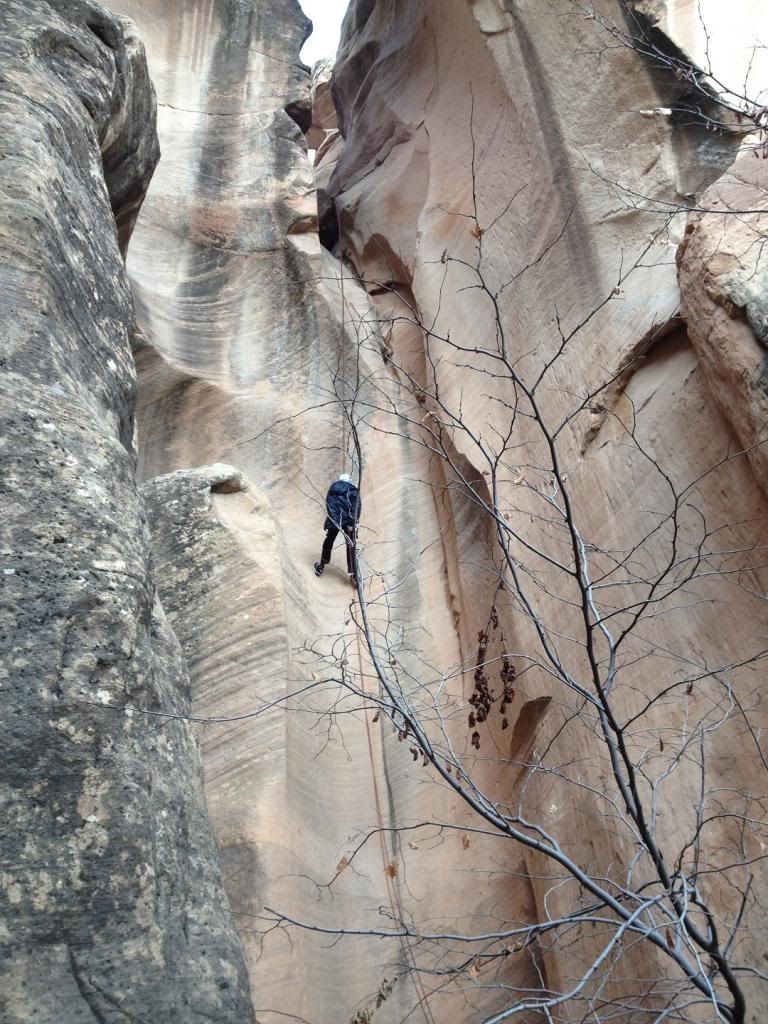
100ft rappel during one of the canyoneering trips near St. George.


As with every trip I take, I learned new things as well as tested my existing knowledge, and my regular gear held up wonderfully (my Optimus Crux stove struggled a little during some of the sub-freezing meal times, though). As usual, I had the opportunity to put some new gear to the test, and that's the information that I want to pass along here.

Columbia Whirlibird - More Info Here

I literally lived in this coat for the entire week. Mostly I used the inner "puffy" coat, and I was as snug as a bug the entire time. I would use the outer shell in the mornings and evenings to stay warm when the sun was not around, and also to wrap my feet at night in the bottom of my sleeping bag to help keep them warm while I slept. I love pockets, and this coat has them in spades - just about every available space was turned into a pocket. And while I'm not a big fan of hoods, this hood is actually comfortable, and the few times I had to use it I didn't hate it. This is seriously one of the best coat "systems" that I've ever used, and I look forward to using it for years to come.

The complete system.


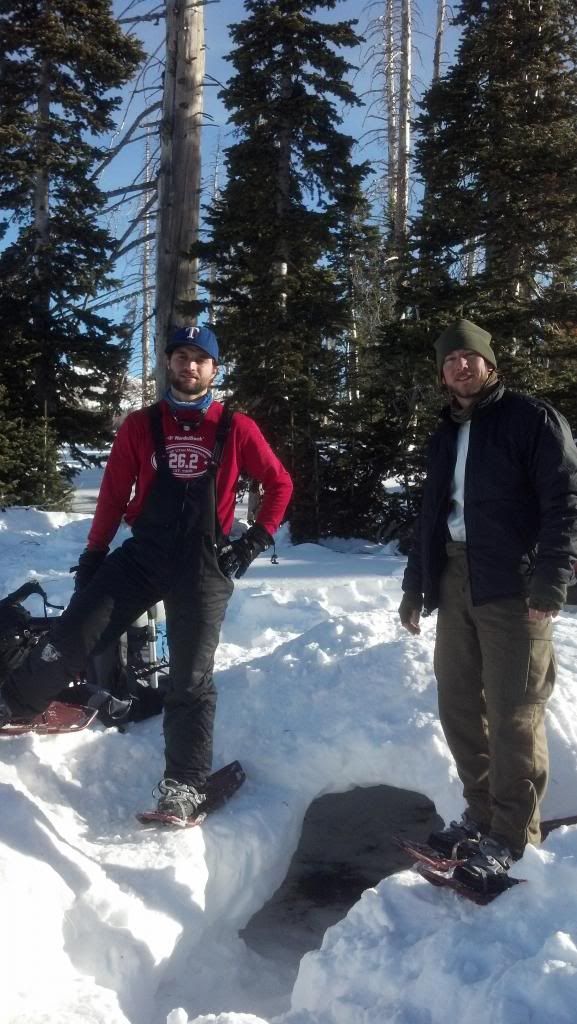
Zach (fellow cold enthusiast) and me by our snowcave the morning after our first night there - I'm sporting the inner puffy coat here.


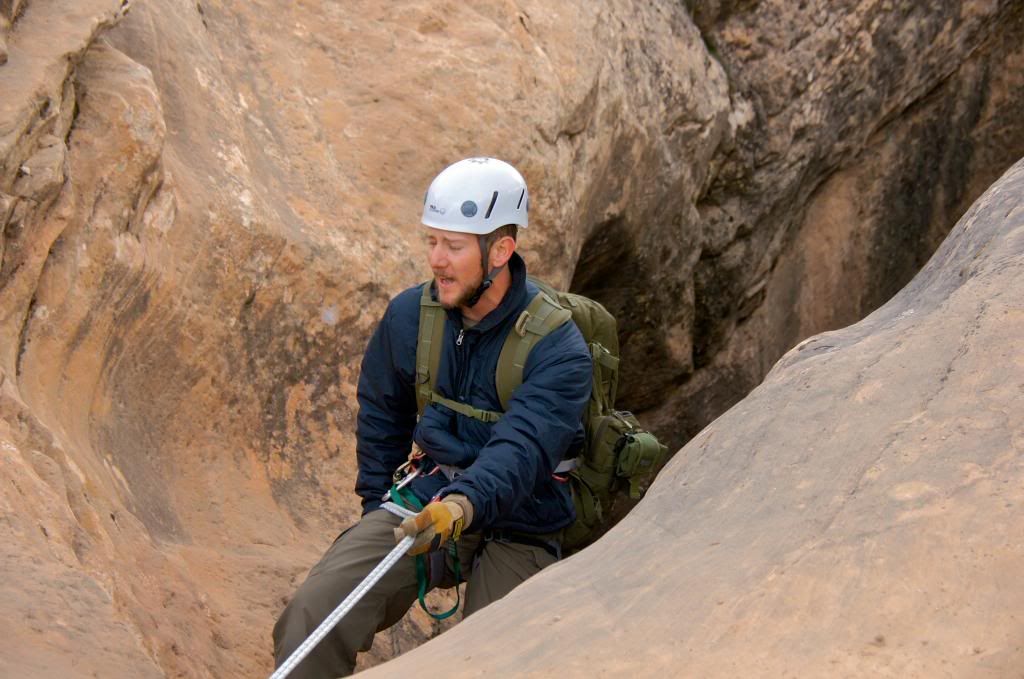
Using the puffy during one of our canyoneering trips (no, I'm not yelling, just communicating with my belayer).

Salomon Elbrus WP - More Info Here

In the past, I haven't been a big fan of Salomon boots, but when I was looking for some good cold weather boots they fit the best. I have generally used the Asolo Fugitives for all of my cold weather trips, but seeing as how this trip was going to include snowshoeing, I wanted to get something that was very well insulated; and besides, my Asolos are beat up beyond serviceable condition. Once I got them into the field, I realized that the Salomon Elbrus is one warm boot! Almost too warm, sometimes, and that's saying a lot when the temps are hovering around zero. They kept my feet warm, dry, and comfortable for the few days I wore them before I switched back to my lightweight hiking boots. Combined with my favorite socks, Darn Tough and Fox River, these boots couldn't have performed better. They also have very aggressive and unique tread, which is something I look for in all of my boots. I have one minor complaint about the size of the lace eyelets, but that's not really an operational concern as much as a personal preference.

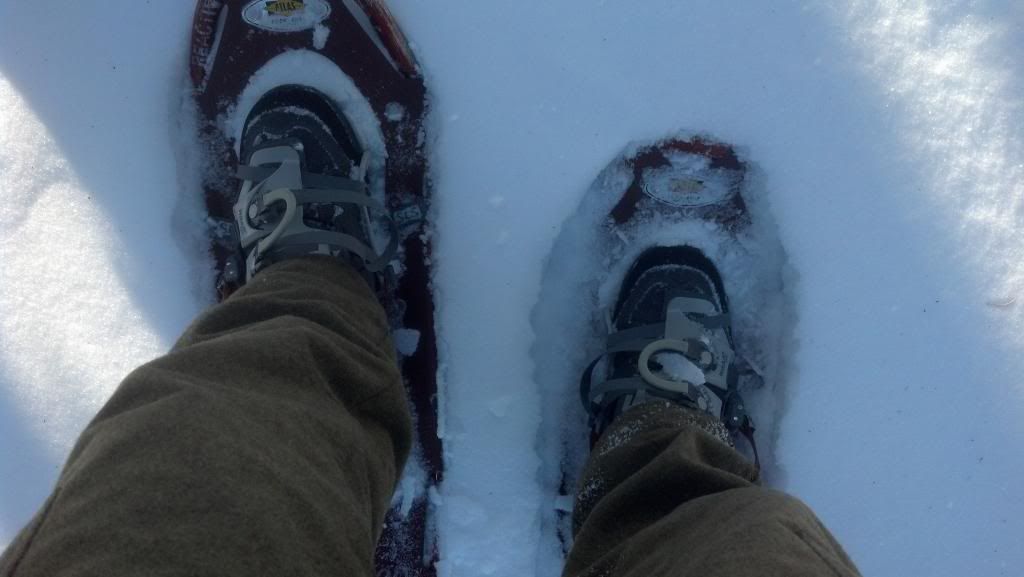
Strapped into the Atlas snowshoes that I used.

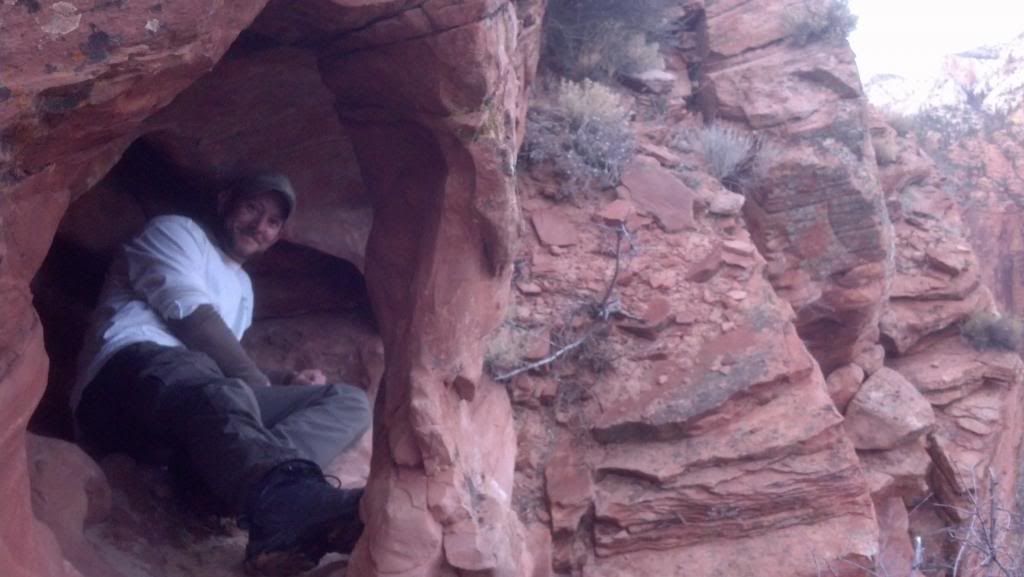
I wore them when we hiked Angel's Landing, and I was happy about that decision when we hit the ice patches. Here I am with my Salomons in a cave I found over the edge of a cliff at Angel's Landing, "a good place to take a nap."


Atlas Snowshoes - More Info Here

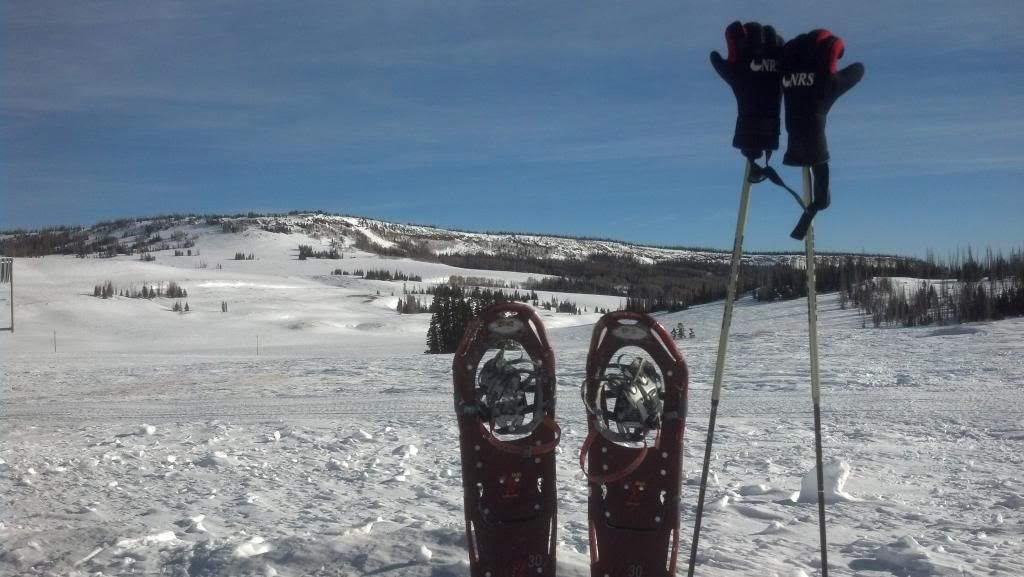
I haven't spent much time in snowshoes in the past, so I don't have much basis for comparison here, but I felt that these shoes worked very well, especially considering that I had a decently weighted pack and at one point ran about 200 feet with pack and all through the snow at a dead run without falling face first into the snow. I liked how they rotated around the foot with each step, and the aggressive crampons on the bottom really helped grab onto some of the harder crusted snow and ice that we encountered. Overall I can't say whether they are better than other shoes, again because of my limited experience with snowshoes, but I can say that I would be happy to use them again. I didn't purchase these, but rather rented them from a local outdoor center, as did everyone else in our group.

The trekking poles and gloves I used have been reviewed in the past, and held up perfectly as always. Trekking poled are invaluable for snowshoeing, in my opinion - I was the only one who had a set and by the end of the snowshoeing part of our expedition I probably could have sold them to one of my fellow hikers for three times their actual cost.
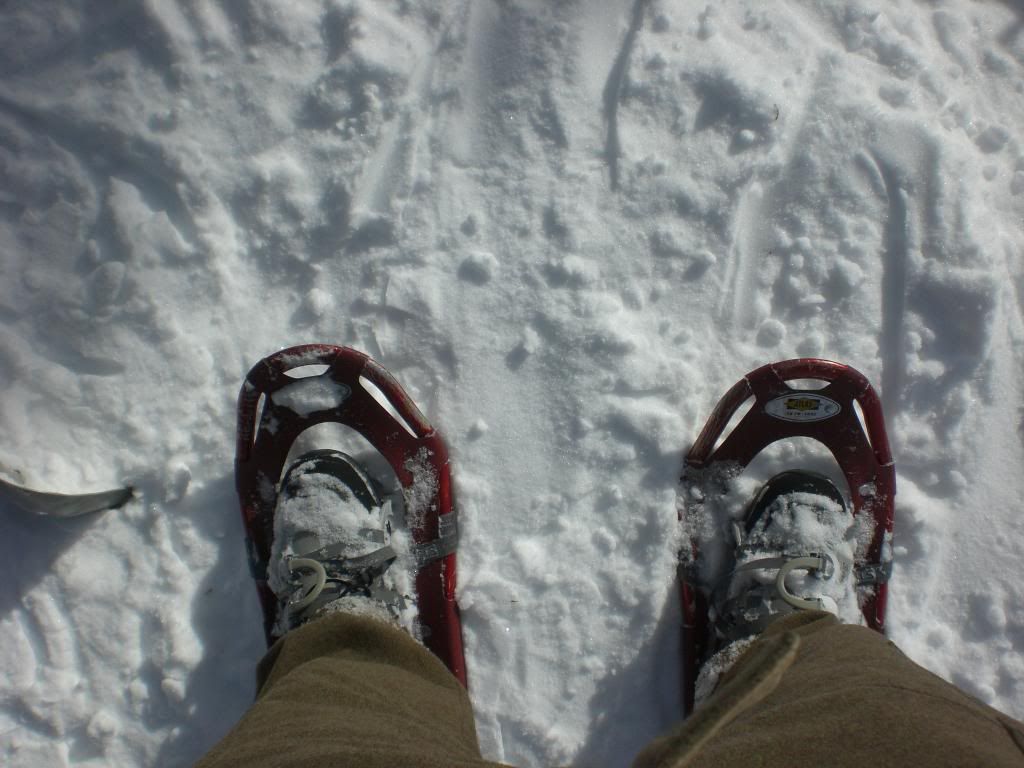
Here are my Salomons effectively locked (and partially frozen) into the Atlas snowshoes.


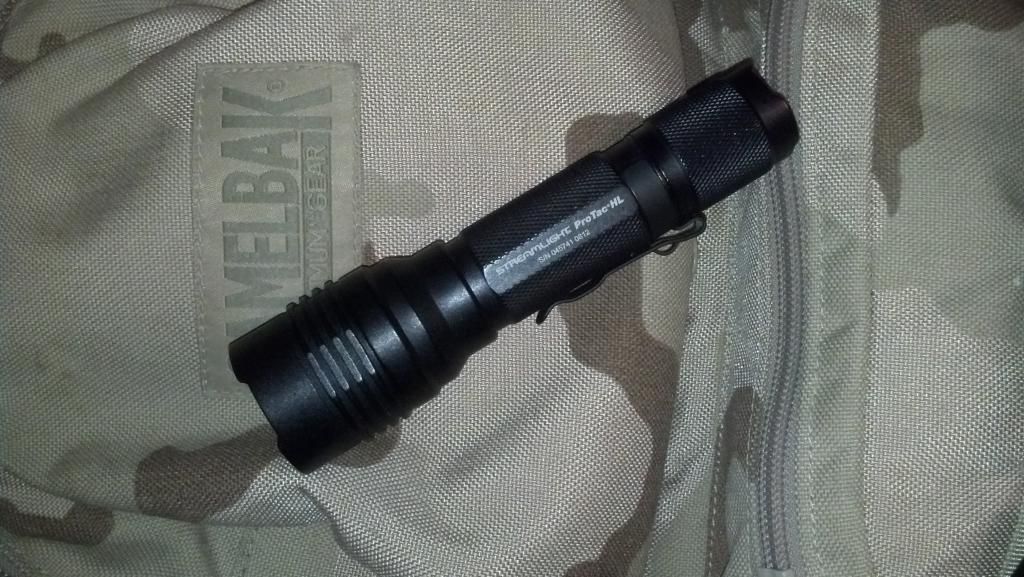
Streamlight ProTac HL - More Info Here

Nearly all of my lights, including my headlamps, are Streamlight, as I'm a big Streamlight fan. The ProTac HL is one of their newer flashlights, and while I didn't get it just for this trip and have owned it for several months, this was the first time it really got to stretch its legs. All I can say is wow! This is one bright light. I could easily see things that were 400m away, and from a light powered by a couple of CR123 batteries, that's impressive. At one point, we were a little confused about where some lava tubes were, and it was a moonless night in the pitch black. We literally found them a couple of hundred yards away thanks to this light. Another time, we were sitting around the campfire when I spotted some movement near the bedrolls so I busted out this light and spotted a little kit fox foraging around the campsite about 20 yards away. The light was so intense when it hit him that you could literally see his confusion and temporary blindness - poor little guy!

My new favorite handheld light for the great outdoors.


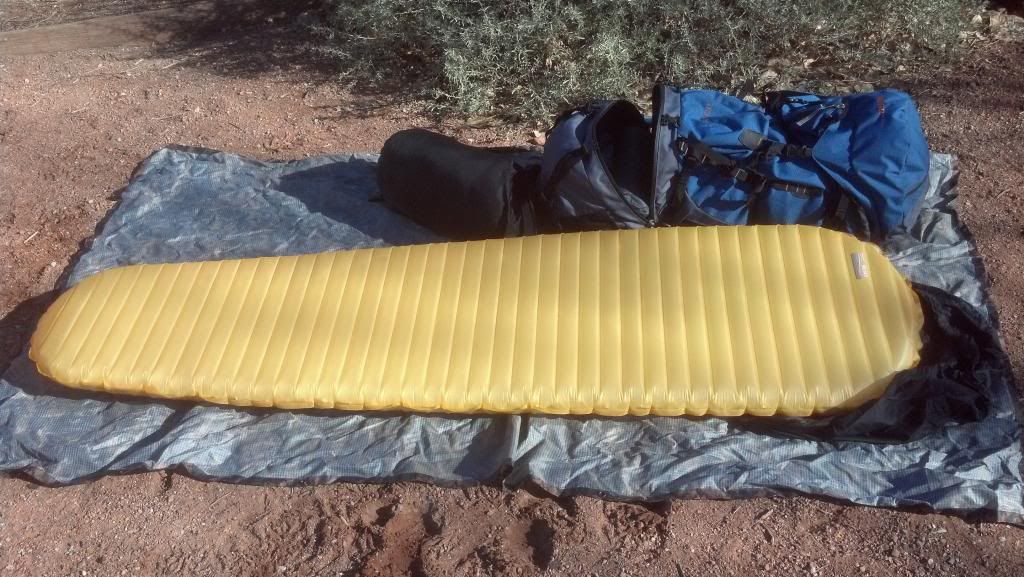
Thermarest NeoAir XLite - More Info Here

This is hands-down my favorite new piece of gear. For the last 6 years I have been using a Thermarest Trail Lite, which is their least expensive pad, and it's big and heavy, but it's served me well. When I saw this new pad, though, coming in at 12 ozs and packing nice and small, while still inflating to 2.5 inches with a layer of heat-reflecting foil inside, I knew that this upgrade would be worth every penny. And man was I right - I love this pad! I like to inflate it all the way, then lay down and gently open the valve, letting just the right amount of air out so that my body is properly contoured. Oh what a delight! It fits my sleeping system perfectly and made every night comfortable and restful. Rolling it up is a bit of a pain, as you need to be sure that every last bit of air is out of it, and what is with companies who think that the stuff sack must be the identical size of a fully compressed product?! A stuff sack with an extra inch of material wouldn't be horrible here.

Home away from home.

Rolls up nice and tight.
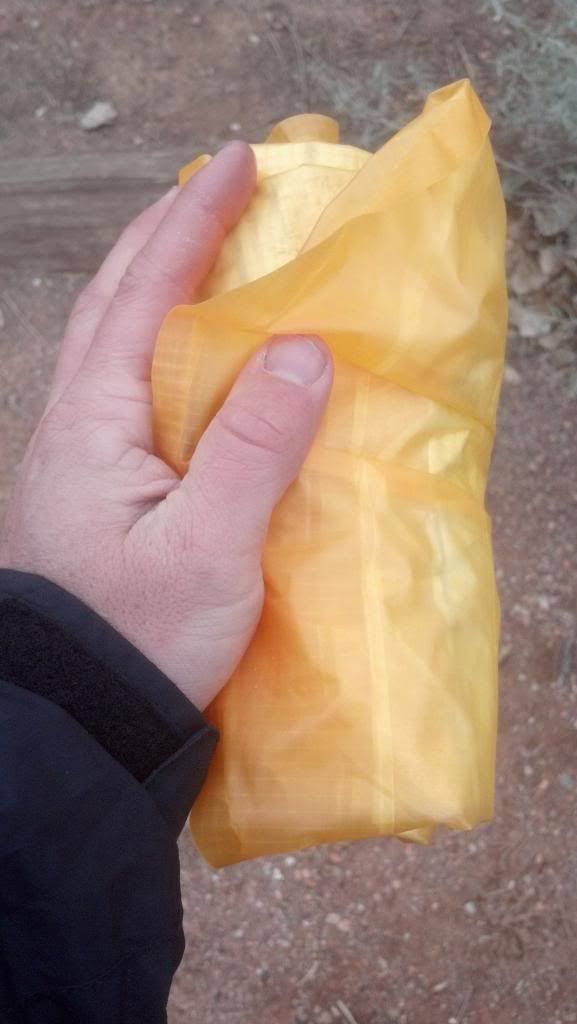
Complete 12oz package, with my hand for size reference, and it even comes with a repair kit.

I could go on about the adventures we had, especially since I always enjoy my time in the outdoors - but suffice to say that it was a great week and good times were had by all. I'm happy with my choices of new gear, and I hope you were able to glean some useful information from my review. Now get out there and have your own adventures!


Stay Aware, Stay Safe, Train Hard.


-Glen Stilson

Tuesday, January 1, 2013

The Versatile .22 - Feed, Entertain, and Defend

The little .22 rimfire cartridge doesn't get a lot of respect from most people, but most of us cut our teeth in the firearms world shooting the small but effective .22LR (Long Rifle) round. And while there are other versions of this cartridge, including the Long, Short, Hornet, and WMR (Winchester Magnum Rimfire), the Long Rifle round is what most of us still use today as it remains the most popular of the .22 rimfires.

While I would not necessarily want to have to defend myself with a .22LR against an armed and determined attacker, I wouldn't put one down if it was my last resort, either. I've heard people say that the bad guy will "probably just laugh at you" if you shoot him with a .22, and indeed it's a well known fact that during the assassination attempt on President Ronald Reagan in March of 1981, several people who were shot, including the President, did not even know they had been shot until later. But it's also a well known fact that the .22LR has been a successful weapon of assassins the world over, as well as the choice for military special operations teams in close quarters operations, such as the tunnel rats in Vietnam. And if you ask your local trauma surgeon about gun shot wounds, they're likely to tell you a story about how they'd rather deal with a large caliber that is easy to locate and remove, as opposed to the small .22LR that tends to hit something solid and then find a new path and trajectory to some other part of the body. And while the oft quoted statement that if you shoot someone or something in the head with a .22LR it will bounce around inside the skull and destroy the brain is theoretical at best, there is no doubt that a well-placed .22LR round, or several quickly well-placed .22LR rounds, will make your attacker either rethink their life decisions, or at the very least have more opposition to fight through with several sharp objects tearing through their flesh. And again, while I personally would not prefer to use a .22LR as my primary defensive tool, I will always abide by the old saying that "a .22 in the hand is better than a .45 in the bush."

The wound cavity from a .22LR, while small compared to larger centerfire rounds,
is still quite effective as the 40 grain bullet travels almost 14.5 inches into the target.
 
 
In today's economy, and in our current political environment, ammunition has become more expensive and in certain circumstances even difficult to find. But in recent years, these rising expenses have driven increasing opportunities to train with and recreate with the .22LR. AR-15s have long been able to be converted to fire the .22LR round, as have several makes of handguns, but now on the market we see AR-style rifles as well as handguns specifically modeled after our primary firearms but available in the .22LR cartridge. This enables us to train with the less expensive round while maintaining proficiency with firearm marksmanship and manipulation. A box of 500 quality .22LR can still be purchased here in Arizona for under $25, while that same dollar amount would only buy a little over 50 rounds of .223/5.56 rounds, or just shy of 100 rounds of 9mm. And the .22LR has little to no recoil, which makes it enjoyable for shooters of all ages, comfort levels, and shooting abilities. Most .22LR rifles and handguns are in the $150 - $400 range, and will easily outlast the shooters who buy them, which also makes them very affordable and easy to obtain. In fact, I have a Winchester .22 rifle that belonged to my great-grandfather, and it still shoots as true today as it did when he held it. My favorite .22 pistol belonged to another grandfather and is still a family favorite when we head to the range. And let's not forget that with the diminutive size comes a diminutive sound, and while hearing protection should still always be worn when shooting any firearm, the blast heard from a .22LR is much less frightening or overpowering than with other, larger rounds. If you have the ability to put a sound suppressor on a .22LR, all the better.

.22LR rounds weigh much less than similar popular calibers, so more can be carried.
Price is also a major factor, as the .22LR pictured above cost around $20, while the .308
cost around $100, the .223 cost around $40, and the 9mm cost around $30.
 
And what about the emergency preparedness side of things? Where does the .22LR stand there? In my opinion, the .22LR may be the ultimate survival firearm. Small, easy to carry ammunition is a huge plus, as the picture above shows. A box of 500 hollowpoint .22LR rounds weighs just under 3lbs 8ozs, while the same weight would only get me 61 rounds of hollowpoint .308, 90 rounds of .223 ammunition loaded in three 30 round AR-15 magazines, or 125 rounds of 9mm in their factory boxes. Those four rounds are the calibers that I shoot the most, and while carrying the same weight limit at best I could get 25% of the number of .22LR rounds by packing 9mm. I consider a survival firearm to be needed primarily for securing a meal of wild game or dispatching larger animals for butchering, and when pressed into service as such it could be used as a defensive tool. However, this survival rifle must be easy to feed with small and inexpensive ammunition, must be lightweight and accurate, and must be reliable enough out to 50 yards, and beyond if needed. This is perhaps why the U.S. military has selected .22 caliber firearms for their aircrew survival kits for many years, including the M4 (.22 Hornet) and M6 (.22 Hornet/.410) survival rifles. The Ithaca M6 and similar rifles, such as the Henry AR-7, are available for civilian purchase and are good choices for last-ditch tools, though I would recommend a solid bolt-action or semi-auto action .22LR, such as the Ruger 10/22, as a primary survival tool.
 
Both of these hollow point rounds were pulled from game animals who had been killed with them;
top-left is an expanded 147 grain 9mm HP, with its unfired version top-right. Center bottom is
an 'expanded' 36 grain .22LR HP - quite small in comparison to the 9mm.
But quite frankly I wouldn't want to be shot with either of them.
 
If you don't own a .22LR caliber firearm, there is simply no excuse for it. With the ample supply of both firearms and ammunition in .22LR, and the myriad of setups that can be attained, from a training tool to a survival tool, or a 100 yard precision rifle to a compact rifle for recreation, there is something out there for you. I have not nor will I likely ever carry a .22LR as a defensive tool - there are simply too many better options. But the merits of the .22LR round are too great to be ignored, and with all that is going on today in this crazy world, I'll happily put to work a firearm that can feed me, entertain me, and if need be, defend me.
 

Stay Aware, Stay Safe, Train Hard.

-Glen Stilson

Friday, November 30, 2012

Vortex Solo R/T - a compact option for taking a closer look

There are many times when I need to take a closer look at something that is far away, but I rarely have my binoculars or my spotting scope with me unless the specific situation calls for it. There are also times when I need to know the range to an object or target, but again, my laser rangefinder only accompanies me on certain occasions, and I'm sad to say that my Kentucky Windage isn't always spot on. The primary reason that I don't carry all of that equipment is that it's just too heavy and bulky to have with me all of the time, but I've always been on the lookout for an optic that could fill all of those needs, be small enough to carry everywhere, and not break the bank. When I was first shown the Vortex Solo R/T monocular, I was pretty sure I had found the answer I was looking for. When I first put it to use in the field, however, I was positive - this optic was the answer to my magnification and rangefinding needs.

The Solo monocular is right at home in the hunting field, and it's so
small and lightweight that you won't be tempted to leave it at camp.

Vortex makes some excellent optics, and they are priced for just about every budget. The Solo R/T (Recon/Tactical) is no different, with a price tag around $120.00. What makes the Solo so handy is not just its size and weight, but also its rugged reliability. My Solo has ridden around on my gear, been beat up in a pack, used in the rain and snow, and even dropped a few times. Yet it still maintains the same clear picture that it had when I first got it, and I'm never tempted to leave it behind due to size or weight. The Solo R/T is also waterproof, shockproof, and fogproof, with multi-coated glare reducing glass. The metal clip works perfectly to attach the optic to a belt or MOLLE compatible gear, and the R/T model features a specific "reticle focus" in addition to the objective focus, which assists in getting the clearest picture possible as well as cuts down on the eye fatigue so common with monocular optics. The 8x magnification is sufficient for my needs, and if you feel you need more, you can always check out the Recon R/T models, which include a 10x and even a 15x model. I wouldn't recommend a higher power monocular, however, as holding an optic steady enough with just one hand is tricky enough with an 8x - anything more than that would need a very steady rest, in my experience.

The Solo also fits well into the tactical and sport shooting arenas, as it clips easily to
MOLLE gear, is rugged and reliable, and uses the milradian system for rangefinding.
 
What really sets the Solo apart from other monoculars, though, is the reticle. Instead of a simple open sight, or a non-standard rangefinding reticle, the Solo uses the tried and true milradian system, also known as MILs or MRADs. This enables me to use the same rangefinding techniques with the Solo that I apply with my precision shooting platforms and other similar optics, and the math is quick and easy to do. There are also a few preset torso target rangefinders built into the reticle so that it is a quick and easy process to gauge distance on torsos from 300m to 600m.
 
 
The Solo reticle features enough milradians to be able to range just about any object, without
cluttering up field of view, and even includes preset torso rangefinding segments.
 

The only real complaints that I have against the Solo R/T are the lack of pouches available that hold it securely in place when mounted to a belt or other gear. I've had to either carry it loose or modify other pouches to work with it. I also wish there was a screw mount on the bottom so that I could mount the Solo to a tripod or similar mount to steady it when the need arises.

As with any piece of gear that I use in the field, I'm always concerned about what happens if I break it, but with the Solo that concern isn't there as I know it is covered by the Vortex lifetime warranty, which is unlimited and unconditional. Learn more about the Vortex Solo R/T by clicking here and visiting the Vortex website. You can also see a short video about it here. If you have other optics needs, such as variable scopes, tactical scopes, budget scopes, or red dot sights, take alook at some of the other optics that Vortex offers - you won't be disappointed.


Stay Aware, Stay Safe, Train Hard.

-Glen Stilson

Wednesday, October 17, 2012

TCB Firearms & Holsters - the best kydex that money can buy!

In a recent conversation with Jason Slisz, owner and operator of TCB Firearms and Holsters, located in San Tan Valley, AZ, I asked him what drives him to put so much time and effort into each and every kydex product that he makes, and he replied, "The larger picture that keeps me moving forward and progressing the craft is that in some small way I am helping people embrace the right of self-preservation."  
 
Ruger SR9 with Streamlight TLR-1 in desert digital on-waistband
(OWB) holster with Tek-Lok MOLLE attachments
 
Jason Slisz has a condition that I will call "craftusperfectitis" - or in other words, he's not happy with his work until it meets his strict level of quality, and his condition is terminal, at least in the sense that he won't be cured anytime soon. For over a year, the instructors here at Independence Training have been using TCB's handgun holsters, magazine holders, and knife sheaths, and as of right now I can honestly say that they are among the best kydex products that we have ever used. This is spoken in greater volumes, however, by how many of our students are also going out and buying TCB products. TCB uses kydex to make their products, and kydex is a thermoplastic - a blend of acrylic and PVC materials, which makes it rigid and durable, but also pliable at certain temperatures so that it can be formed to an exact shape, and then retain that shape once it has cooled. And retain that shape it does. In fact, kydex is such a durable and strong material that all of my own personal holsters, magazine holders, and the majority of my knife sheaths are all kydex, even my in-waistband (IWB) concealed carry holsters are kydex, and nearly all made by TCB.
 
Ruger SR9 in a Bravo in-waistband (IWB) concealment holster
 
There are several advantages to having a rigid holster, sheath, or magazine holder from TCB, not the least of which is the ability to re-holster or re-sheath with one hand, as the material does not collapse when empty. Kydex also does not lose it's shape, such as nylon or leather will do. You can use a kydex holster to perform single-handed malfunction clearances with a handgun thanks to its durable and stiff body, and kydex is strong enough to stand up to being run over by a truck, so it won't break or snap if you fall on it or bang it around when you're putting it to good use. Because it is formed to one handgun, type of magazine, or knife, it securely holds that item in place, as opposed to "universal" holsters and sheaths that are more likely to drop your equipment when turned upside down or rattled around. Those types of holsters may even require snaps, buckles, or straps to secure your gear - and all of those can get in the way when you're trying to draw your handgun, re-holster, or reload. However, even though it's been formed for one specific item, it's easy for TCB to modify your holster or sheath if you upgrade to a new slide stop on your handgun, change to a different style of magazine, or decide that you want the tension of the kydex to fit more tightly or more loosely. TCB can also mount several different types of carry systems for your holster or sheath, including belt loops, belt clips, rubber straps, and Tek-Lok MOLLE compatible slips and systems.
 
9mm double-stack magazine holder in coyote tan
 
There's one thing that kydex isn't, however - at least, not naturally: it's not pretty. And while the holster itself may not always get you the same looks of admiration that a custom-made leather piece may, for those of us who care more about function than fashion, this is hardly a concern. And besides, you can get TCB to make you a kydex product in just about any color! Want a coyote tan magazine holder to mount on your coyote tan tactical vest? How about a pink holster for that little pink handgun? Or even better - how about some camo patterns? TCB has kydex materials in several different camouflage patterns, including the desert digital and woodland digital patterns that I am so fond of.
 
Smith & Wesson Model 64 in an Alpha on-waistband  (OWB)
holster in woodland digital camo
 
Becker Campanion in desert digital sheath
with Tek-Lok belt slide
 
And don't think that TCB can only make you handgun holsters, magazine holders, or knife sheaths. Kydex can be formed to hold just about anything, and I have seen TCB phone sheaths, flashlight holders, axe and tomahawk cases, even TCB chapstick holders! If you've got a piece of equipment that needs to be retained securely but accessed quickly, contact TCB Firearms and Holsters to see what they can do! And since here at Independence Training we like to work with other quality-driven Arizona businesses, TCB fits our needs very nicely. TCB isn't just limited to producing one or two pieces for the average citizen, either - they are a major producer and supplier of holsters and duty gear to law-enforcement agencies, competition shooters, and military organizations both local and national. In fact, TCB just finished up a batch of M9 holsters and magazine holsters for some soldiers headed downrange, including our very own John Pinnix. And if those who put themselves in harm's way on a daily basis trust TCB's gear, then that says a lot about TCB's addiction to quality equipment.
 
M9 holsters that will accompany our soldiers downrange
 
 
In short, if you haven't tried out a TCB product yet, why not? Call Jason today to see what TCB can make for you, and if you're in the neighborhood, he'll have you swing by the shop just to try a few things out. In my opinion, there is no greater compliment I can give than to do repeat business with a company that I believe in - and that's why I continue to do business with Jason and TCB.
 
Jason Slisz, owner of TCB Firearms and Holsters, putting his own gear to work and
getting dirty at an Independence Training Defensive Carbine course.
 
 
 Stay Aware, Stay Safe, Train Hard.

-Glen Stilson

Monday, September 24, 2012

US PALM Defender Vest - lightweight and inexpensive bullet stopper

When many people think of armor, they immediately think of military personnel or law enforcement. What they generally don't think of is the average citizen - in fact, I've found the topic of body armor for the average citizen to be quite taboo, even in the shooting and training community. The most common question I hear is "Why would I ever need body armor?" My answer is always the same: "To stop bullets that want to pierce your Juicy Goodness!" Most people that I speak to about personal armor consider owning it to be "overkill" or "paranoid." This is always something I find amusing, since they don't seem to think that a half-dozen or more firearms and thousands of rounds of ammunition is "overkill" or "paranoid." Nor do most of those same people consider a first-aid kit, a fire extinguisher, extra food or extra batteries to be "overkill" or "paranoid." Yet for some reason, armor of any kind seems to fit in that description.

But before I go any further, and before you write personal body armor off completely, I want to give you a few scenarios to consider:

SCENARIO #1There's a bump in the night, and you must go check on your kids. Your spouse is calling 911 while you retrieve your firearm, and as you enter the hallway headed to your kids' room, you see a shadowy figure approaching. You get your light turned on and identify the shadowy figure as an uninvited guest who is holding a handgun. As you instinctively fire your handgun, so does he, and since your light is attached to your handgun and he's shooting at the light, his rounds strike your shooting hand and your chest. Your hits are also effective, and the intruder retreats into your living room and collapses. Thankfully, you had taken the 2 seconds needed to put on your soft armor before heading into the hallway, and while your shooting hand hurts like crazy and the impact from the slugs into your vest put you back against the wall, you are able to switch your handgun to your other shooting hand while you move to your kids' room and safeguard your family. Bandaging your wounded hand is an easy task while you await EMS, and with a few surgeries and some recovery time, you are still able to hug your spouse and play ball with your kids.

SCENARIO #2. . . . As you instinctively fire your handgun, so does he, and since your light is attached to your handgun and he's shooting at the light, his rounds strike your shooting hand and your chest. Your hits are also effective, and the intruder retreats into your living room and collapses. One of the rounds that penetrated into your chest nicks your heart and puts a whole in your lung, and as you collapse to the ground, you can hear your wife screaming. Your children run to your side as your vision blurs. Whether or not you die from these wounds is not important right now - what is important is that you are no longer able to protect your family.

SCENARIO #3. . . . As you instinctively fire your handgun, so does he, and since your light is attached to your handgun and he's shooting at the light, his rounds strike your shooting hand and your chest, pushing you back against the wall. Your shot placement is also spot on, but since this particular bad guy has purchased some soft armor from eBay for $50, even the best shot placement in the chest won't matter. While your hits knock him to the ground, he fires a few more rounds, one of which strikes you again in the chest, and with 2 holes in your lungs, you struggle to breathe as you watch your assailant pick himself up and move towards your family.

I could go on with variations, different locations, and circumstances that are just that - circumstantial. So why have body armor, when the chance that you'll have to use it is so slim? Consider that there is only a 1% chance that you'll ever even have to use a firearm in self-defense, so why have that, either? Because it falls under the same reason that we prepare for everything else that we can prepare for: It's better to have it and not need it, than need it and not have it.

And this is where US Primary Armament Logistical Manufacturing, or US PALM as they are more widely known, comes in. First off, they are on my list of "Arizona Companies That I Like To Do Business With." Second, they make some very cost effective personal armor options, and I believe the most useful of these options to the average citizen is the Defender vest. This vest comes in several different colors and varieties: Handgun (with built-in holster and magazine holders), AR-15, AK-47, and .308 (each with built-in magazine holders), Slick (just like it sounds, and designed to be concealable), and MOLLE (which has MOLLE webbing to allow for customization of pouches and gear). At a price point of $199 for front armor, and $299 for front and back armor, it is very affordable, and it's easy to put on and customizable for just about any body size, including children, if needed. The armor used inside of the Defender carrier is from ArmorExpress, and is Level IIIA, which means it will stop .44 Mag hits reliably all the way to the edge of the armor. In fact, I've seen the Defender vest stop a 12 gauge slug, though anyone wearing a soft armor vest that got hit with a 12 gauge slug would be suffering some serious internal injuries - one of them wouldn't be a penetrating gunshot wound, though! Be aware that this is soft armor, however, and it will not stop rifle rounds - for that you need hard armor, such as ceramic plate or steel plate.


The picture shown above is a picture of a US PALM Defender vest that was shot multiple times with a .45 ACP with absolutely no penetration and not even any back face deformation - in other words, no major internal damage to your body. The large slug in the front is the 12 gauge slug I previously mentioned that was fired into a Defender vest, which can be seen slightly behind the Defender shown above. If you are anywhere near Scottsdale, AZ, you can view both of these vests, as well as the entire US PALM line, at Scottsdale Gun Club.

In my training, I have found the Defender vest to be extremely comfortable. It breathes well in the heat, takes serious abuse without fail, and is lightweight enough to be worn all day without fatigue. For my personal armor, I chose the MOLLE version, as it allows me to customize the armor according to my needs.


But more than just buying armor is training with it. Putting it on in the dark, in a hurry, and certainly training while shooting and practicing hand-to-hand techniques is a must so that you know how your vest will affect your mobility and your speed. One of the reaons I like the Defender vest so much, in addition to its high level of protection, is that it fits like a glove yet is quick to put on. It also does not get in the way of my drawstroke when wearing my CCW handgun and holster, as you can see in the photo above. The MOLLE version, as I already mentioned, allows me to select what pouches or accessories to add, if any. In keeping with my philosophy of light and fast, I chose to add only a CAT tourniquet and a Streamlight PT-2L flashlight to my setup, both of which are easily accessible with either hand yet neither get in my way, and both of which I consider a necessity to deal with just about any self-defense situation.

If you are starting to consider purchasing body armor by this point, then I applaud your thinking, especially considering that the Sheepdog seeks to always have the same, if not better, tools than the wolf so that he or she can effectively defend against the wolf. And make no mistake about it, there are certainly wolves out there with access to body armor, often a stolen item which means it is better quality than they could normally afford. And if you are considering purchasing body armor, understand that not all armor is created equal: there are materials out there that are old, sub-par, and even flat out dangerous, so do your research, and of course you can always contact us with your questions.

If nothing else, consider armor as another addition to your emergency equipment list, nothing more than a fire extinguisher, a first-aid kit, extra water, or a little extra food. And just like those other items, it may one day be necessary for you to continue your way of life. Without it, however, you may be just another bullet sponge, and a bullet sponge can't defend themselves, defend their family, or stop bad guys from hurting others.


Stay Aware, Stay Safe, Train Hard.

-Glen Stilson

Wednesday, August 29, 2012

Hiking in the Grenadier Mountains - an equipment test

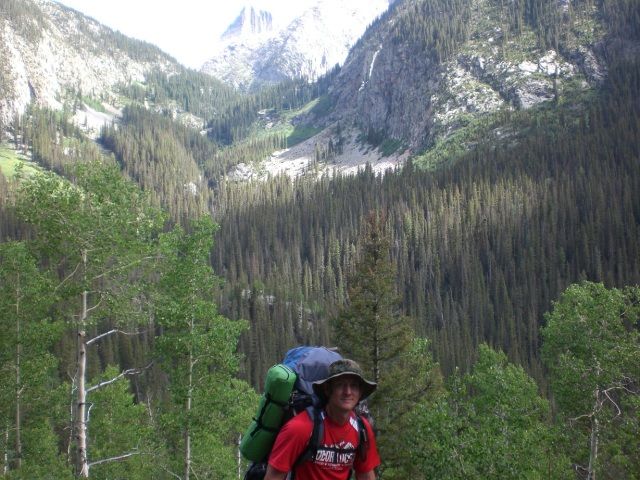
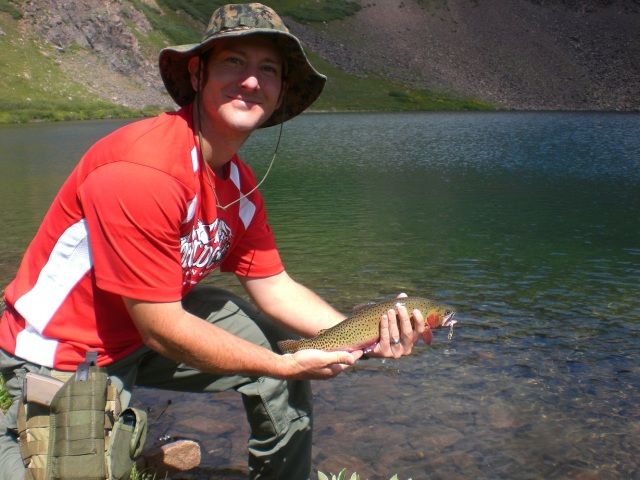
For this month's Equipment Review, I'm going to do something a little different. Instead of shooting and tactical gear, we're going to take a look at some camping and hiking equipment. Last month I headed into the Grenadier Mountains of Colorado for a week with some friends, and even though the terrain was rough, it was beautiful and rewarding, in more ways than one.


I do quite a bit of backpacking - you could call it a passion, in fact. And every time I head out, whether it's into the desert, the rolling hills, or the high mountains, I always learn something new about myself and my gear. For this trip, I had recently purchased several pieces of new gear, and even though I field-tested them beforehand to make sure they wouldn't fail me, the rocky, high altitude, rain-every-day environment of the Grenadier Mountains really put them to the test. Here's the new gear that I used, and what I discovered about it.

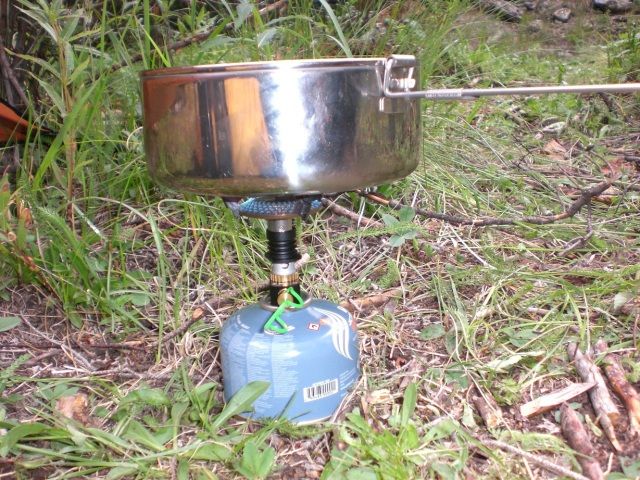
Optimus Crux stove - More Info Here
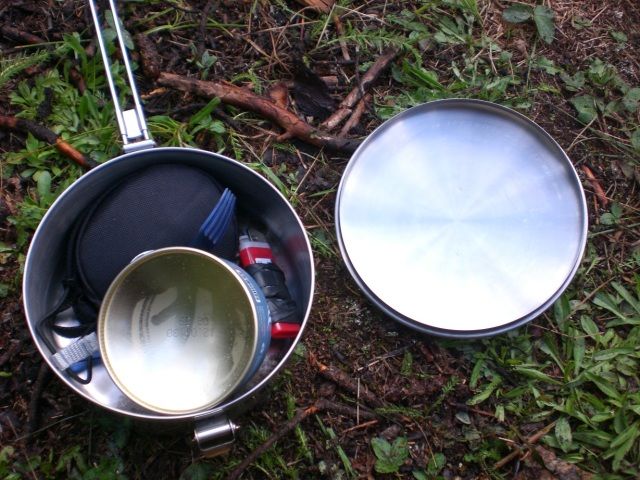
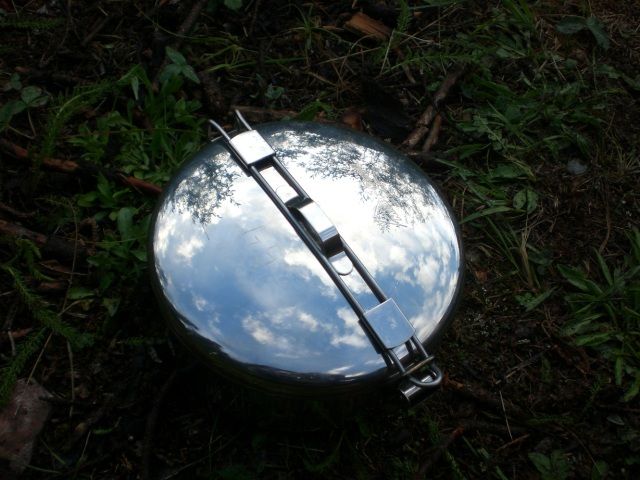
Simply said, this is the greatest camping stove I have ever owned. In the past I have tried everything from the MSR Whisperlite, which burns hot but is too large and fragile, to the German military surplus Esbit stoves, which are lightweight, small, and easy to use but slow for cooking. The Crux, however, is the best of everything without the problems. It's small and lightweight, fits into a neoprene pocket that slips over the bottom of an isobutane can, and burns hot. I can boil 1 liter of water in just over 2 minutes, and a 100 gram can of fuel lasted me 5 days with 2 cooked meals a day. It's easy to use and so far is very durable - I've cooked over 25 meals on it at this point without a hiccup. As for packing it, I can fit the stove, a 100 gram can of fuel, utensils, lighter, and seasoning in my 1 liter MSR pot with room left over for drink mixes, small food packs, etc.


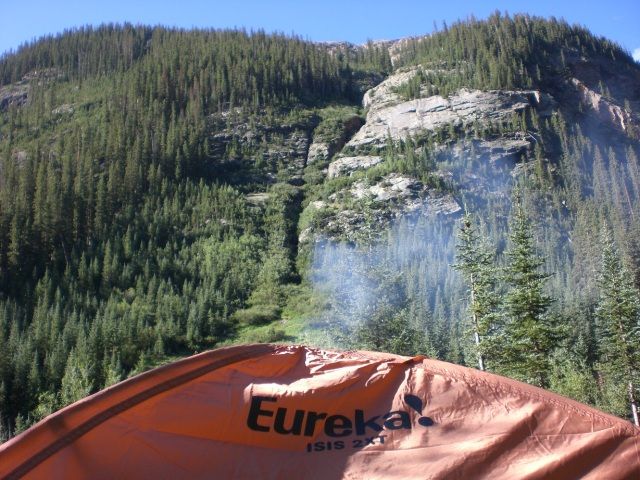
Eureka! Isis 2XT tent - More Info Here
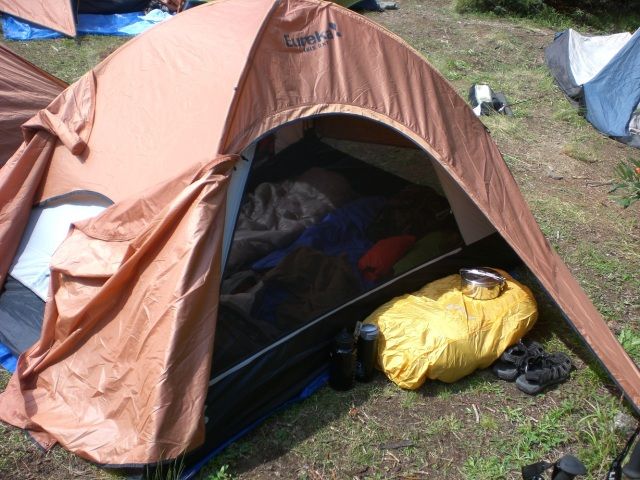
I don't use tents when I can avoid it - normally I sleep on the ground or under a shelter of some kind. For my Colorado trip, however, I wanted to make sure I could keep all of my gear totally dry, since rain was forecast everyday. I didn't want to spend a bundle, since I don't see myself packing a 5lb tent around that much, so when one of the other guys I would be hiking with found and purchased the Isis 2XT, I just had to try one out for myself. The seams are already sealed, but to be safe I re-sealed all seams on the tent and fly, even over the factory seal. Whether it helped or not I don't know, but all of my gear and my tent mate's gear stayed bone dry all week.
The tent is roomy enough for 2 grown men to not feel cramped, and the vestibule is large enough that I kept my main pack and several other items outside all week during the daily rainstorms without them getting even a bit damp. The double entry side doors are perfect for keeping you from crawling over your buddy or your gear to get in or out, and the ventilation was sufficient enough that we didn't wake up with too much condensation. It packs up easily and tightly, and overall I was very happy with this tent. I made a few modifications to it, though.

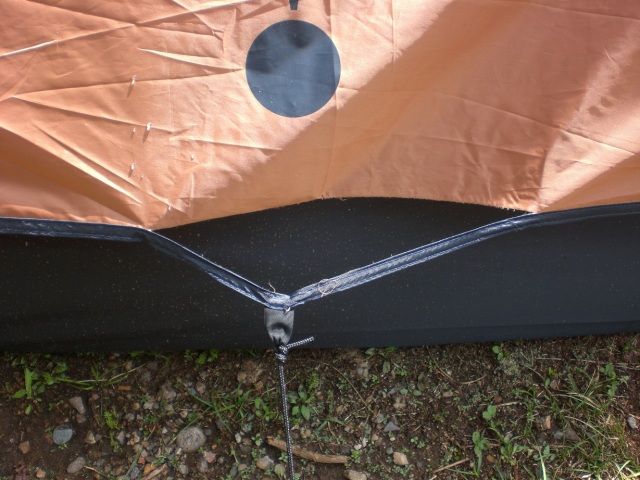
First, I added a 1 foot length of 550 cord to the vestibule zipper so that you can actually reach it from inside the tent and not have to crawl halfway out just to open the flap. Second, I tossed out the flimsy tent stakes that the Isis comes with and replaced them with aluminum tent stakes, like the ones found here. It's an inexpensive fix to a major pain. The only gripe I have with the tent is that I ran guy line from the bottom of the front of the rain fly, and when one of the guys just lightly tripped on it, it ripped pretty significantly. It didn't rip any further though, even when I left it tied out, and it still got the job done. Some polyester thread and a little sewing once I got back to the home front and the fly was fixed easily enough.


Black Diamond Stow 'n' Go rain jacket
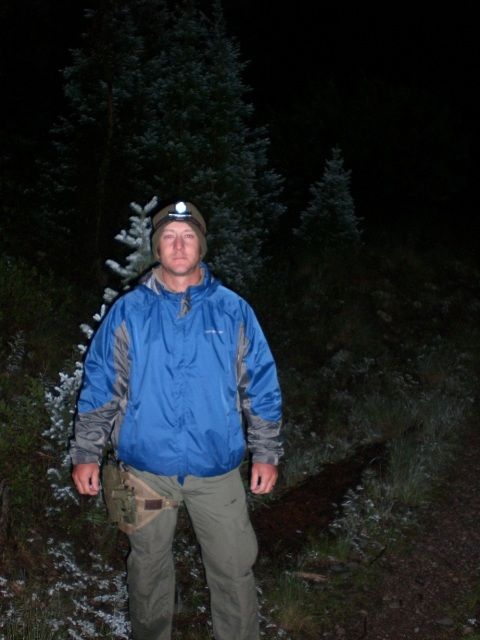
This was not technically the first time I have ever used this jacket, but it was the first time I have used it every day for a week. As usual, Black Diamond delivers a product that is completely effective. This is a lightweight jacket that kept me 100% dry, and the fold up hood, which stores very neatly in the collar, was a huge advantage during heavy downpours and hail. The most impressive part of this jacket for me is that a small swamp wasn't created inside of it when the rain stopped or the sun came out - there was plenty of ventilation and I never felt uncomfortable in the least. Once it's done being used, it stows inside its own pocket, and packs up small enough that I could put it in the cargo pocket of my pants. Here I am enjoying one of the rain storms that is literally freezing once it hits the ground.


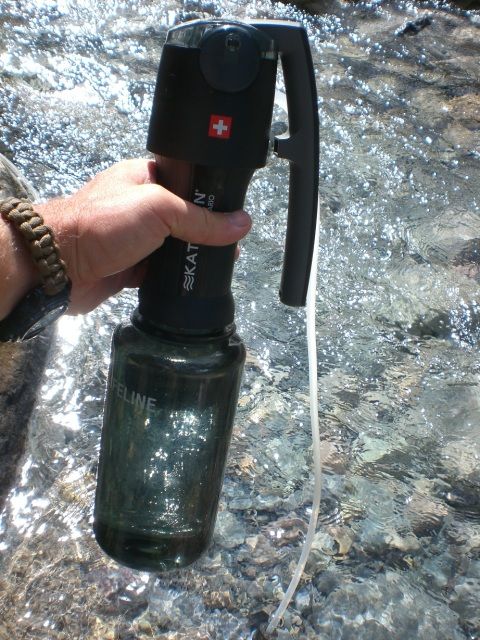
Katadyn Vario water filter - More Info Here
Also not the first time I've used this piece of gear, but certainly the first time I've relied on it this heavily. There were a few different filters in camp, and thank goodness for that, as a few days in several of them started to go down. My Vario was the last one to break (the check valve in the head crapped out on the night before we left) while the two MSR MiniWorks EX filters were dead within a couple of days, not sure what happened with those. The only filter left standing at the end of the week was the MSR HyperFlow, which was the slowest and made you look like a fool every time you used it. In the past, my Vario has worked flawlessly, and the filter was far from the end of its life. It easily pumps 2 liters a minute, and for the first few days it did just that. When it started slowing down, I pulled it apart and cleaned it, even changed some o-rings, but to no avail. Once I got home I called Katadyn and they sent me a new head assembly stating that the check valve was most likely broken. We'll see what the future holds for this filter - before the Colorado trip I had full confidence in it, but now I'm not so sure.


Motorola P893 Battery Charger - More Info Here
I bought this item specifically for this trip, but ended up not even getting any cell service all week, so I didn't really need this until the last day when we were waiting for the train to pick us up. I ran the battery on my phone all the way down on purpose, and then hooked this charger up to it while we waited. It's supposed to hold enough juice for 1 to 1 1/2 full phone charges, but what I found what that it held enough for 1 charge of about 75%, and that took a couple of hours to accomplish. I'll continue to use it as an emergency power source, but it defininitely does not perform as advertised. I've tried it several times since then with similar results, and after contacting Verizon and Motorola about it, they say I may have a defective unit. I peronsally think that they are just over-estimating this unit's capability.


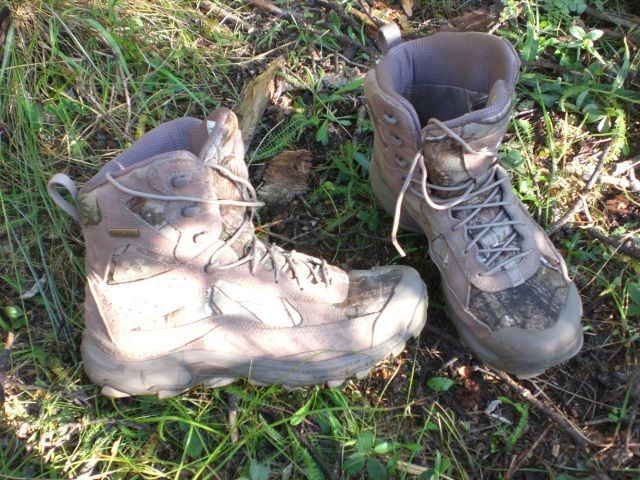
Under Armour Speed Freek boots - More Info Here
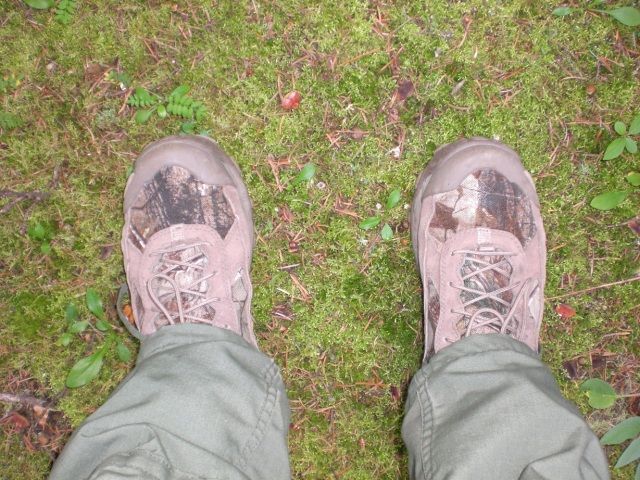
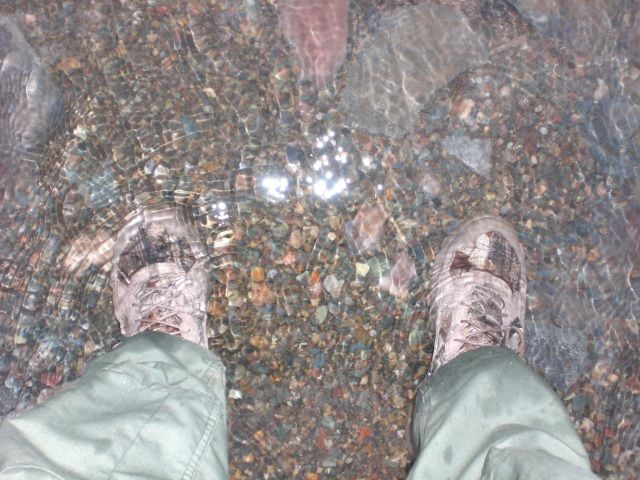
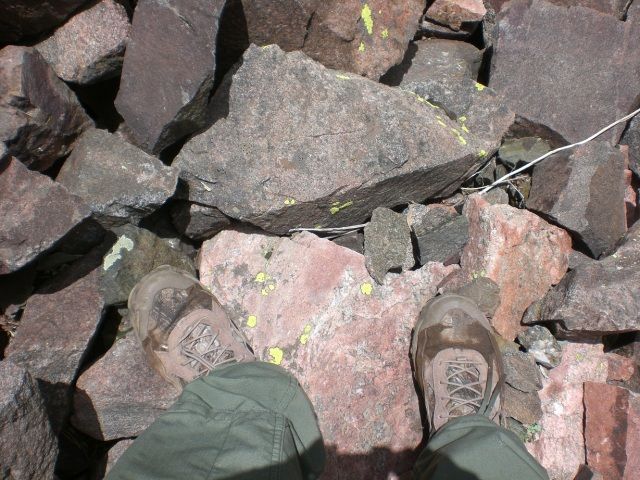
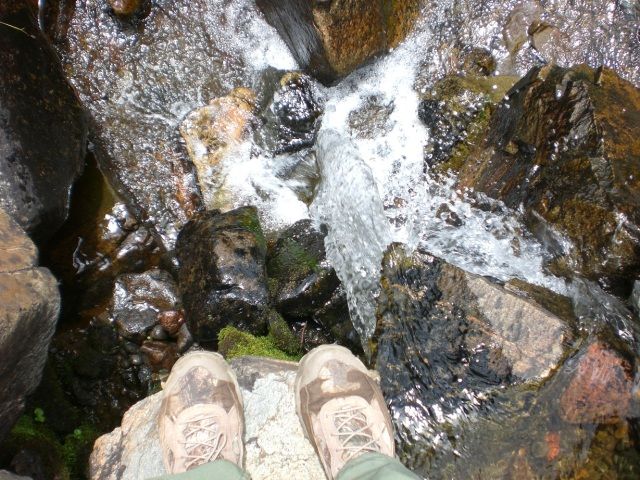
There are few things more important to an outdoorsman that his footwear, and cheap boots will almost always let you down. This is a lesson that I have learned the hard way and don't want to ever learn again. That being said, I have tried just about every boot out there, including Danner, Merrell (my wife loves her Merrells), Salomon, Keen, Bates, and Asolo. The only one that can stand up to the use and abuse that I put my boots through are the Asolos (the Fugitive GTX, to be exact) and I fully intended to buy another pair since I just blew through my last pair. But then someone recommended the Under Armour Speed Freeks, and though I was a little hesitant at putting my trust in a brand of footwear that was largely untested, I decided to give it a try, and so far, so good. These are the lightest boots I have every worn, and they are fully waterproof (Gore-Tex). The tread is aggressive and saved me more than a couple of when I was free climbing up the face of a peak near our camp on day 2. The sole is puncture proof (so they say) and the lining inside is moisture wicking. My only complaint is that with no insulation (I usually prefer a 200gram Thinsulate lining), they do get a little chilly when the temperature drops, even with the right socks.
As you can see below, my Speed Freeks have already been in several different environments and they have performed very well.


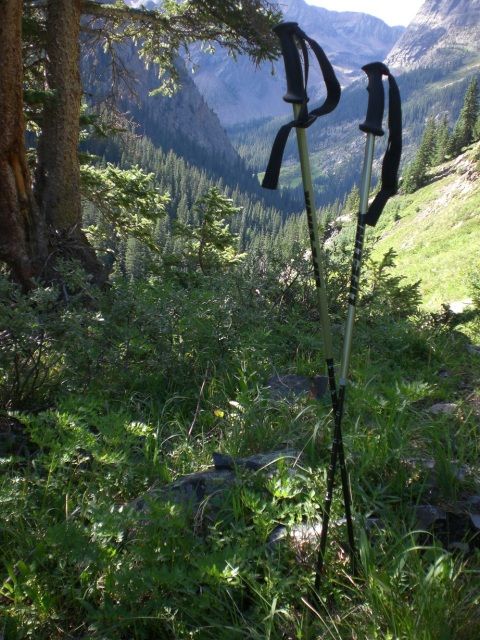
Life-Link Trekking poles - More Info Here
I have used my trekking poles before, but not like this. On this trip, these poles literally saved me - and my knees and my feet. With the kind of hiking we did at some of the angles we were on, it would have really been tough to not have poles, as a couple of the guys who went can attest to. Life-Link poles are designed to not fail, even under extreme stress, so I had confidence that my poles wouldn't break when I needed them most. There were a few poles from other brands that did fail on this trip, which made me glad to have the same poles issued to US Navy SEALs. The only thing I would have changed is to put the small baskets on instead of the large baskets, as the large baskets got jammed in rocky areas a few times. I had expected more muddy conditions, which the large baskets did help with, but the smaller ones would have been easier to maneuver with.


Handgun and Holster - More Info Here and Here
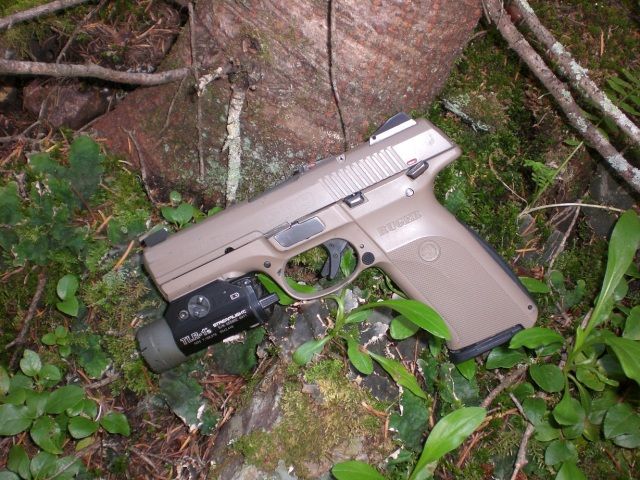
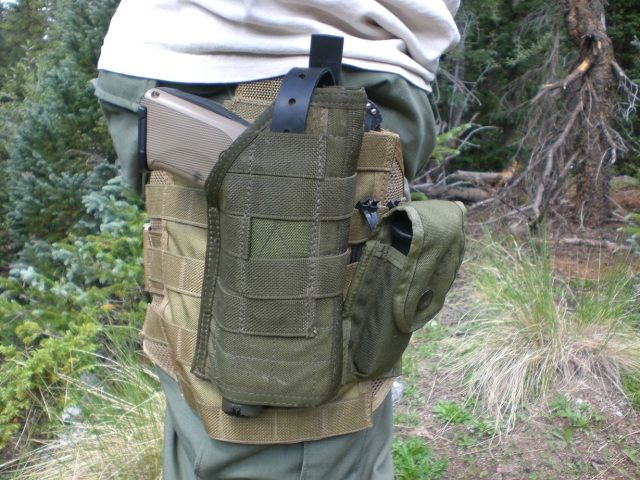
As always, my handgun goes where I go, and backpacking is no exception. While this setup is far from a new piece of gear, I feel that it deserves mention since it always performs so well. My Ruger SR9 is my primary carry gun as well as my primary instructor handgun, and it's seen over 10k rounds with no issues or hiccups. It gets used and abused in all environments and conditions and has yet to fail me - even the freezing rain of the Colorado mountains couldn't stop it. When I go backpacking, I like to mount a Streamlight TLR-1s light on my handgun, which turns it into a very solid defensive platform. I also use a thigh rig to keep the handgun out of the way of kidney pads but still easily accessible. For this setup I use an HSGI MOLLE platform with an Eagle universal light holster, and a USGI mag pouch. Yes, those are zip ties. No, they don't bother me.


In addition to the gear mentioned above, my sleep system, my pack, and several other pieces of tried-and-true equipment all performed as expected - they have seen enough miles and grueling days to have my full faith and confidence. As usual, this trip taught me more about how far my gear can go as well as my own ability to push my body to its limits. Hiking at elevation levels up to 14k can be tough, but the experiences you have there are always worth it.


Stay Aware, Stay Safe, Train Hard.

-Glen Stilson