Monday, September 24, 2012

US PALM Defender Vest - lightweight and inexpensive bullet stopper

When many people think of armor, they immediately think of military personnel or law enforcement. What they generally don't think of is the average citizen - in fact, I've found the topic of body armor for the average citizen to be quite taboo, even in the shooting and training community. The most common question I hear is "Why would I ever need body armor?" My answer is always the same: "To stop bullets that want to pierce your Juicy Goodness!" Most people that I speak to about personal armor consider owning it to be "overkill" or "paranoid." This is always something I find amusing, since they don't seem to think that a half-dozen or more firearms and thousands of rounds of ammunition is "overkill" or "paranoid." Nor do most of those same people consider a first-aid kit, a fire extinguisher, extra food or extra batteries to be "overkill" or "paranoid." Yet for some reason, armor of any kind seems to fit in that description.

But before I go any further, and before you write personal body armor off completely, I want to give you a few scenarios to consider:

SCENARIO #1There's a bump in the night, and you must go check on your kids. Your spouse is calling 911 while you retrieve your firearm, and as you enter the hallway headed to your kids' room, you see a shadowy figure approaching. You get your light turned on and identify the shadowy figure as an uninvited guest who is holding a handgun. As you instinctively fire your handgun, so does he, and since your light is attached to your handgun and he's shooting at the light, his rounds strike your shooting hand and your chest. Your hits are also effective, and the intruder retreats into your living room and collapses. Thankfully, you had taken the 2 seconds needed to put on your soft armor before heading into the hallway, and while your shooting hand hurts like crazy and the impact from the slugs into your vest put you back against the wall, you are able to switch your handgun to your other shooting hand while you move to your kids' room and safeguard your family. Bandaging your wounded hand is an easy task while you await EMS, and with a few surgeries and some recovery time, you are still able to hug your spouse and play ball with your kids.

SCENARIO #2. . . . As you instinctively fire your handgun, so does he, and since your light is attached to your handgun and he's shooting at the light, his rounds strike your shooting hand and your chest. Your hits are also effective, and the intruder retreats into your living room and collapses. One of the rounds that penetrated into your chest nicks your heart and puts a whole in your lung, and as you collapse to the ground, you can hear your wife screaming. Your children run to your side as your vision blurs. Whether or not you die from these wounds is not important right now - what is important is that you are no longer able to protect your family.

SCENARIO #3. . . . As you instinctively fire your handgun, so does he, and since your light is attached to your handgun and he's shooting at the light, his rounds strike your shooting hand and your chest, pushing you back against the wall. Your shot placement is also spot on, but since this particular bad guy has purchased some soft armor from eBay for $50, even the best shot placement in the chest won't matter. While your hits knock him to the ground, he fires a few more rounds, one of which strikes you again in the chest, and with 2 holes in your lungs, you struggle to breathe as you watch your assailant pick himself up and move towards your family.

I could go on with variations, different locations, and circumstances that are just that - circumstantial. So why have body armor, when the chance that you'll have to use it is so slim? Consider that there is only a 1% chance that you'll ever even have to use a firearm in self-defense, so why have that, either? Because it falls under the same reason that we prepare for everything else that we can prepare for: It's better to have it and not need it, than need it and not have it.

And this is where US Primary Armament Logistical Manufacturing, or US PALM as they are more widely known, comes in. First off, they are on my list of "Arizona Companies That I Like To Do Business With." Second, they make some very cost effective personal armor options, and I believe the most useful of these options to the average citizen is the Defender vest. This vest comes in several different colors and varieties: Handgun (with built-in holster and magazine holders), AR-15, AK-47, and .308 (each with built-in magazine holders), Slick (just like it sounds, and designed to be concealable), and MOLLE (which has MOLLE webbing to allow for customization of pouches and gear). At a price point of $199 for front armor, and $299 for front and back armor, it is very affordable, and it's easy to put on and customizable for just about any body size, including children, if needed. The armor used inside of the Defender carrier is from ArmorExpress, and is Level IIIA, which means it will stop .44 Mag hits reliably all the way to the edge of the armor. In fact, I've seen the Defender vest stop a 12 gauge slug, though anyone wearing a soft armor vest that got hit with a 12 gauge slug would be suffering some serious internal injuries - one of them wouldn't be a penetrating gunshot wound, though! Be aware that this is soft armor, however, and it will not stop rifle rounds - for that you need hard armor, such as ceramic plate or steel plate.


The picture shown above is a picture of a US PALM Defender vest that was shot multiple times with a .45 ACP with absolutely no penetration and not even any back face deformation - in other words, no major internal damage to your body. The large slug in the front is the 12 gauge slug I previously mentioned that was fired into a Defender vest, which can be seen slightly behind the Defender shown above. If you are anywhere near Scottsdale, AZ, you can view both of these vests, as well as the entire US PALM line, at Scottsdale Gun Club.

In my training, I have found the Defender vest to be extremely comfortable. It breathes well in the heat, takes serious abuse without fail, and is lightweight enough to be worn all day without fatigue. For my personal armor, I chose the MOLLE version, as it allows me to customize the armor according to my needs.


But more than just buying armor is training with it. Putting it on in the dark, in a hurry, and certainly training while shooting and practicing hand-to-hand techniques is a must so that you know how your vest will affect your mobility and your speed. One of the reaons I like the Defender vest so much, in addition to its high level of protection, is that it fits like a glove yet is quick to put on. It also does not get in the way of my drawstroke when wearing my CCW handgun and holster, as you can see in the photo above. The MOLLE version, as I already mentioned, allows me to select what pouches or accessories to add, if any. In keeping with my philosophy of light and fast, I chose to add only a CAT tourniquet and a Streamlight PT-2L flashlight to my setup, both of which are easily accessible with either hand yet neither get in my way, and both of which I consider a necessity to deal with just about any self-defense situation.

If you are starting to consider purchasing body armor by this point, then I applaud your thinking, especially considering that the Sheepdog seeks to always have the same, if not better, tools than the wolf so that he or she can effectively defend against the wolf. And make no mistake about it, there are certainly wolves out there with access to body armor, often a stolen item which means it is better quality than they could normally afford. And if you are considering purchasing body armor, understand that not all armor is created equal: there are materials out there that are old, sub-par, and even flat out dangerous, so do your research, and of course you can always contact us with your questions.

If nothing else, consider armor as another addition to your emergency equipment list, nothing more than a fire extinguisher, a first-aid kit, extra water, or a little extra food. And just like those other items, it may one day be necessary for you to continue your way of life. Without it, however, you may be just another bullet sponge, and a bullet sponge can't defend themselves, defend their family, or stop bad guys from hurting others.


Stay Aware, Stay Safe, Train Hard.

-Glen Stilson

Wednesday, August 29, 2012

Hiking in the Grenadier Mountains - an equipment test

For this month's Equipment Review, I'm going to do something a little different. Instead of shooting and tactical gear, we're going to take a look at some camping and hiking equipment. Last month I headed into the Grenadier Mountains of Colorado for a week with some friends, and even though the terrain was rough, it was beautiful and rewarding, in more ways than one.


I do quite a bit of backpacking - you could call it a passion, in fact. And every time I head out, whether it's into the desert, the rolling hills, or the high mountains, I always learn something new about myself and my gear. For this trip, I had recently purchased several pieces of new gear, and even though I field-tested them beforehand to make sure they wouldn't fail me, the rocky, high altitude, rain-every-day environment of the Grenadier Mountains really put them to the test. Here's the new gear that I used, and what I discovered about it.

Optimus Crux stove - More Info Here
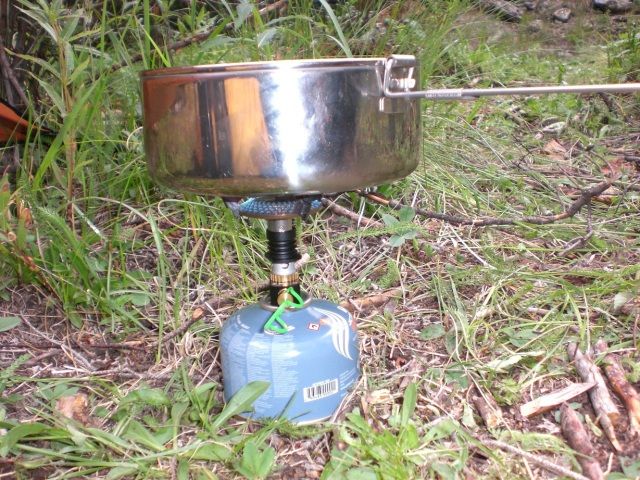
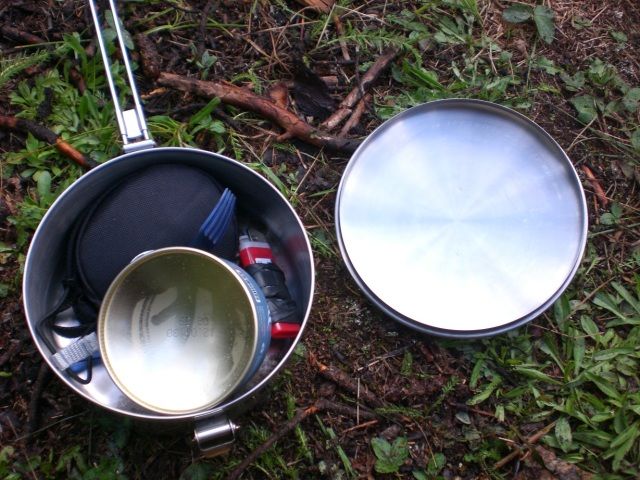
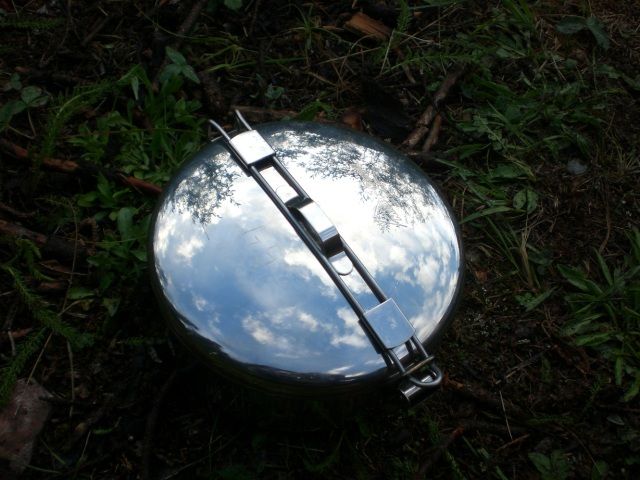
Simply said, this is the greatest camping stove I have ever owned. In the past I have tried everything from the MSR Whisperlite, which burns hot but is too large and fragile, to the German military surplus Esbit stoves, which are lightweight, small, and easy to use but slow for cooking. The Crux, however, is the best of everything without the problems. It's small and lightweight, fits into a neoprene pocket that slips over the bottom of an isobutane can, and burns hot. I can boil 1 liter of water in just over 2 minutes, and a 100 gram can of fuel lasted me 5 days with 2 cooked meals a day. It's easy to use and so far is very durable - I've cooked over 25 meals on it at this point without a hiccup. As for packing it, I can fit the stove, a 100 gram can of fuel, utensils, lighter, and seasoning in my 1 liter MSR pot with room left over for drink mixes, small food packs, etc.


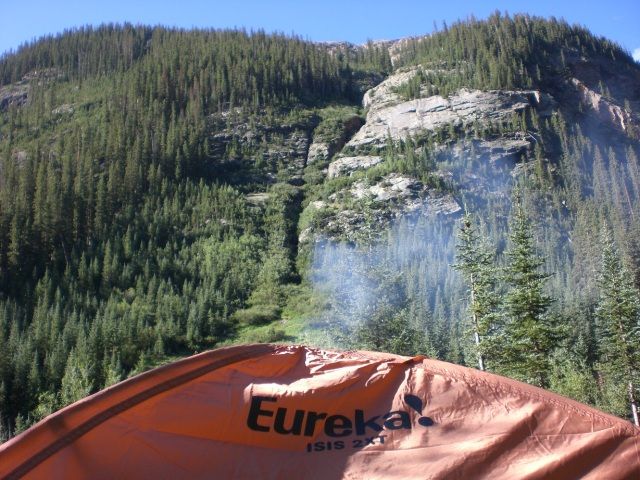
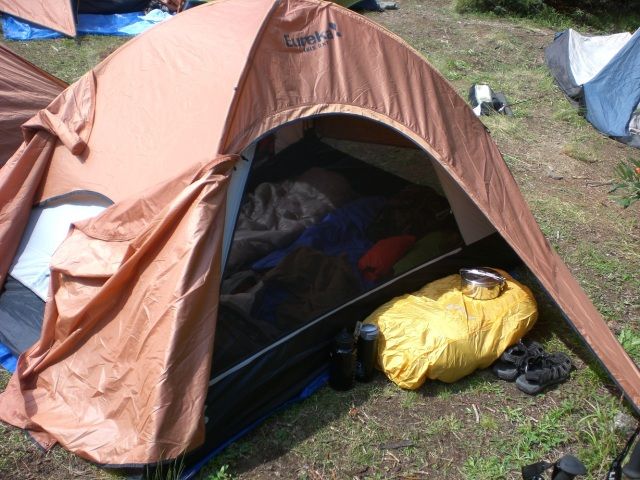
Eureka! Isis 2XT tent - More Info Here
I don't use tents when I can avoid it - normally I sleep on the ground or under a shelter of some kind. For my Colorado trip, however, I wanted to make sure I could keep all of my gear totally dry, since rain was forecast everyday. I didn't want to spend a bundle, since I don't see myself packing a 5lb tent around that much, so when one of the other guys I would be hiking with found and purchased the Isis 2XT, I just had to try one out for myself. The seams are already sealed, but to be safe I re-sealed all seams on the tent and fly, even over the factory seal. Whether it helped or not I don't know, but all of my gear and my tent mate's gear stayed bone dry all week.
The tent is roomy enough for 2 grown men to not feel cramped, and the vestibule is large enough that I kept my main pack and several other items outside all week during the daily rainstorms without them getting even a bit damp. The double entry side doors are perfect for keeping you from crawling over your buddy or your gear to get in or out, and the ventilation was sufficient enough that we didn't wake up with too much condensation. It packs up easily and tightly, and overall I was very happy with this tent. I made a few modifications to it, though.

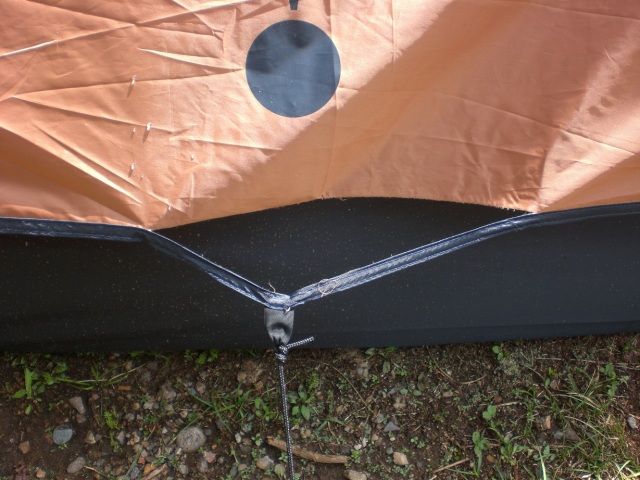
First, I added a 1 foot length of 550 cord to the vestibule zipper so that you can actually reach it from inside the tent and not have to crawl halfway out just to open the flap. Second, I tossed out the flimsy tent stakes that the Isis comes with and replaced them with aluminum tent stakes, like the ones found here. It's an inexpensive fix to a major pain. The only gripe I have with the tent is that I ran guy line from the bottom of the front of the rain fly, and when one of the guys just lightly tripped on it, it ripped pretty significantly. It didn't rip any further though, even when I left it tied out, and it still got the job done. Some polyester thread and a little sewing once I got back to the home front and the fly was fixed easily enough.


Black Diamond Stow 'n' Go rain jacket
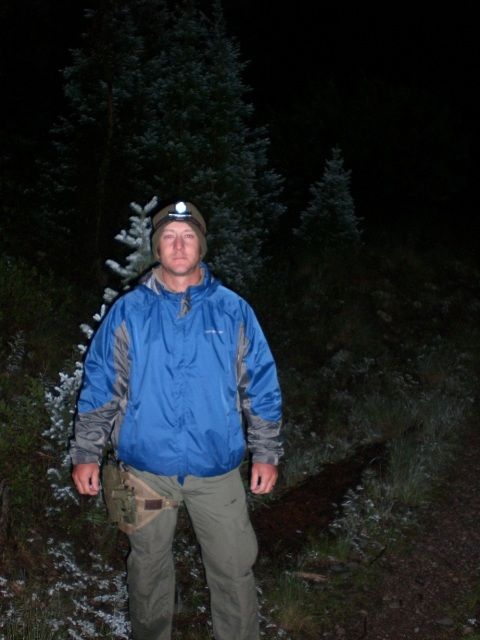
This was not technically the first time I have ever used this jacket, but it was the first time I have used it every day for a week. As usual, Black Diamond delivers a product that is completely effective. This is a lightweight jacket that kept me 100% dry, and the fold up hood, which stores very neatly in the collar, was a huge advantage during heavy downpours and hail. The most impressive part of this jacket for me is that a small swamp wasn't created inside of it when the rain stopped or the sun came out - there was plenty of ventilation and I never felt uncomfortable in the least. Once it's done being used, it stows inside its own pocket, and packs up small enough that I could put it in the cargo pocket of my pants. Here I am enjoying one of the rain storms that is literally freezing once it hits the ground.


Katadyn Vario water filter - More Info Here
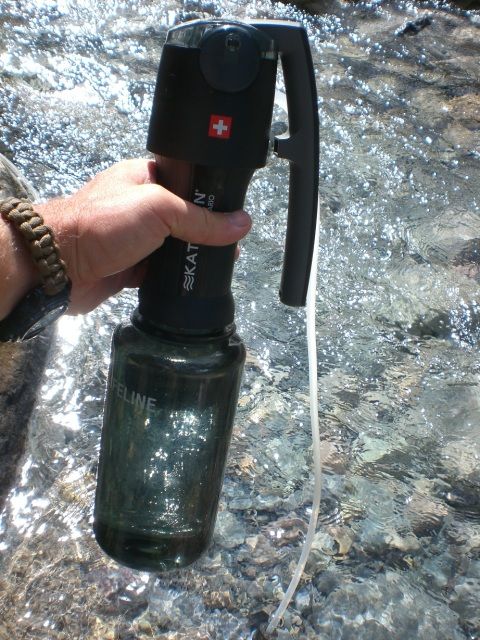
Also not the first time I've used this piece of gear, but certainly the first time I've relied on it this heavily. There were a few different filters in camp, and thank goodness for that, as a few days in several of them started to go down. My Vario was the last one to break (the check valve in the head crapped out on the night before we left) while the two MSR MiniWorks EX filters were dead within a couple of days, not sure what happened with those. The only filter left standing at the end of the week was the MSR HyperFlow, which was the slowest and made you look like a fool every time you used it. In the past, my Vario has worked flawlessly, and the filter was far from the end of its life. It easily pumps 2 liters a minute, and for the first few days it did just that. When it started slowing down, I pulled it apart and cleaned it, even changed some o-rings, but to no avail. Once I got home I called Katadyn and they sent me a new head assembly stating that the check valve was most likely broken. We'll see what the future holds for this filter - before the Colorado trip I had full confidence in it, but now I'm not so sure.


Motorola P893 Battery Charger - More Info Here
I bought this item specifically for this trip, but ended up not even getting any cell service all week, so I didn't really need this until the last day when we were waiting for the train to pick us up. I ran the battery on my phone all the way down on purpose, and then hooked this charger up to it while we waited. It's supposed to hold enough juice for 1 to 1 1/2 full phone charges, but what I found what that it held enough for 1 charge of about 75%, and that took a couple of hours to accomplish. I'll continue to use it as an emergency power source, but it defininitely does not perform as advertised. I've tried it several times since then with similar results, and after contacting Verizon and Motorola about it, they say I may have a defective unit. I peronsally think that they are just over-estimating this unit's capability.


Under Armour Speed Freek boots - More Info Here
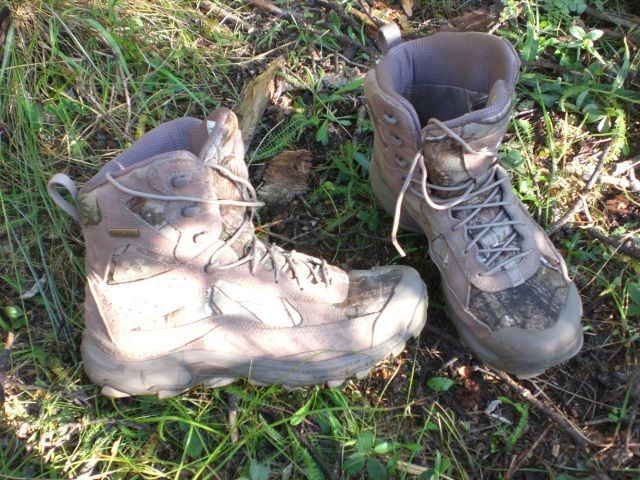
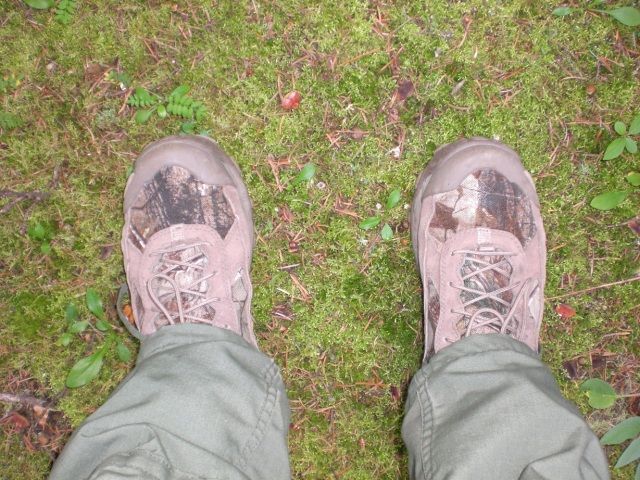
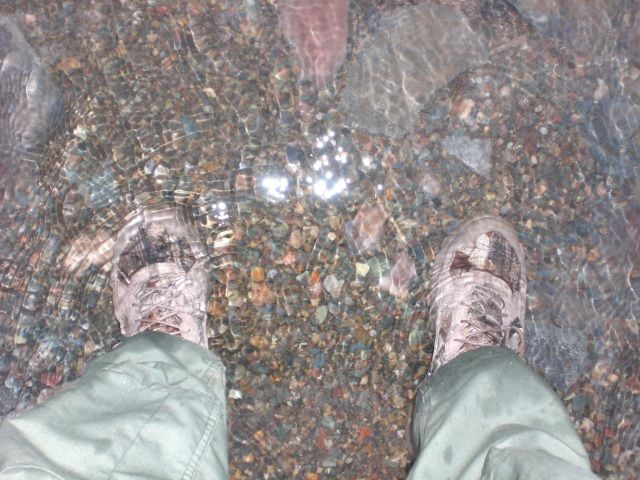
There are few things more important to an outdoorsman that his footwear, and cheap boots will almost always let you down. This is a lesson that I have learned the hard way and don't want to ever learn again. That being said, I have tried just about every boot out there, including Danner, Merrell (my wife loves her Merrells), Salomon, Keen, Bates, and Asolo. The only one that can stand up to the use and abuse that I put my boots through are the Asolos (the Fugitive GTX, to be exact) and I fully intended to buy another pair since I just blew through my last pair. But then someone recommended the Under Armour Speed Freeks, and though I was a little hesitant at putting my trust in a brand of footwear that was largely untested, I decided to give it a try, and so far, so good. These are the lightest boots I have every worn, and they are fully waterproof (Gore-Tex). The tread is aggressive and saved me more than a couple of when I was free climbing up the face of a peak near our camp on day 2. The sole is puncture proof (so they say) and the lining inside is moisture wicking. My only complaint is that with no insulation (I usually prefer a 200gram Thinsulate lining), they do get a little chilly when the temperature drops, even with the right socks.
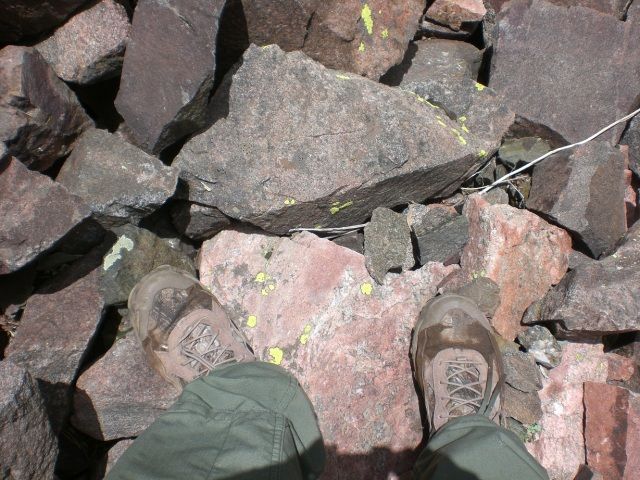
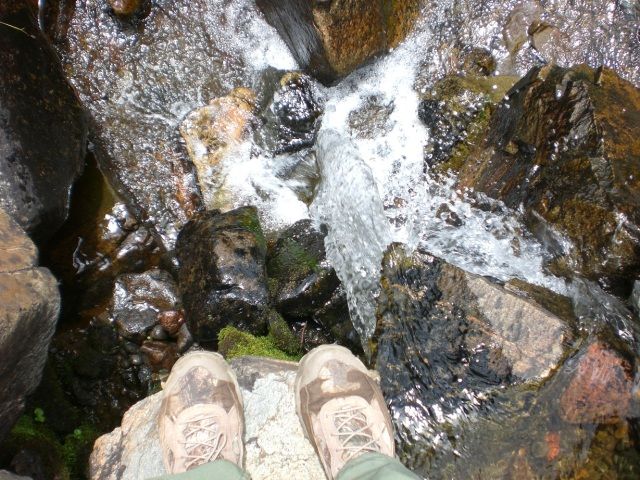
As you can see below, my Speed Freeks have already been in several different environments and they have performed very well.


Life-Link Trekking poles - More Info Here
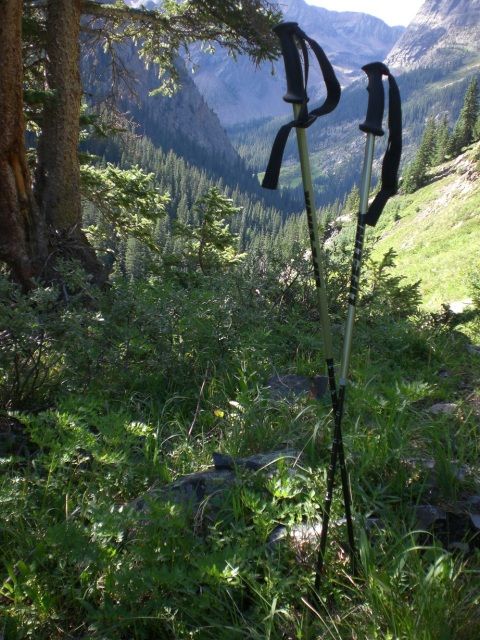
I have used my trekking poles before, but not like this. On this trip, these poles literally saved me - and my knees and my feet. With the kind of hiking we did at some of the angles we were on, it would have really been tough to not have poles, as a couple of the guys who went can attest to. Life-Link poles are designed to not fail, even under extreme stress, so I had confidence that my poles wouldn't break when I needed them most. There were a few poles from other brands that did fail on this trip, which made me glad to have the same poles issued to US Navy SEALs. The only thing I would have changed is to put the small baskets on instead of the large baskets, as the large baskets got jammed in rocky areas a few times. I had expected more muddy conditions, which the large baskets did help with, but the smaller ones would have been easier to maneuver with.


Handgun and Holster - More Info Here and Here
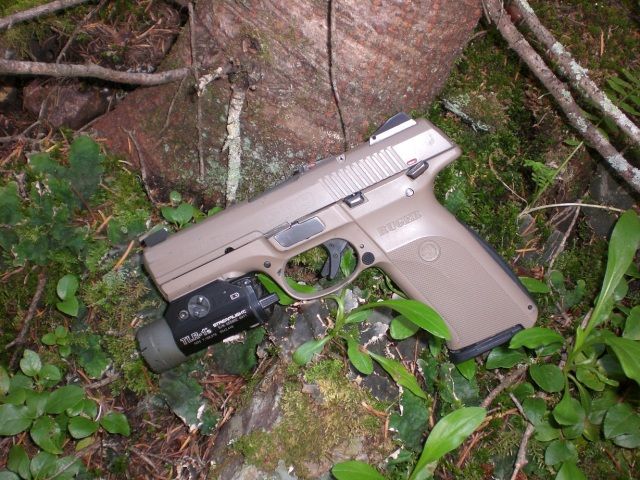
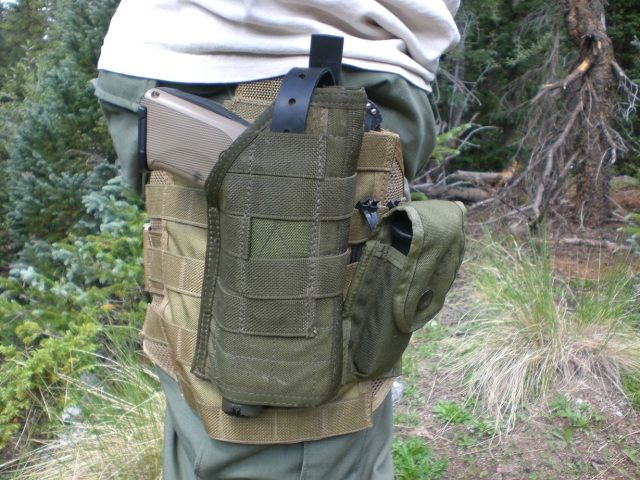
As always, my handgun goes where I go, and backpacking is no exception. While this setup is far from a new piece of gear, I feel that it deserves mention since it always performs so well. My Ruger SR9 is my primary carry gun as well as my primary instructor handgun, and it's seen over 10k rounds with no issues or hiccups. It gets used and abused in all environments and conditions and has yet to fail me - even the freezing rain of the Colorado mountains couldn't stop it. When I go backpacking, I like to mount a Streamlight TLR-1s light on my handgun, which turns it into a very solid defensive platform. I also use a thigh rig to keep the handgun out of the way of kidney pads but still easily accessible. For this setup I use an HSGI MOLLE platform with an Eagle universal light holster, and a USGI mag pouch. Yes, those are zip ties. No, they don't bother me.


In addition to the gear mentioned above, my sleep system, my pack, and several other pieces of tried-and-true equipment all performed as expected - they have seen enough miles and grueling days to have my full faith and confidence. As usual, this trip taught me more about how far my gear can go as well as my own ability to push my body to its limits. Hiking at elevation levels up to 14k can be tough, but the experiences you have there are always worth it.


Stay Aware, Stay Safe, Train Hard.

-Glen Stilson

Sunday, July 8, 2012

The Knives in our Lives: Part 2 - John

As far back as I can remember I have always carried a pocketknife. My very first knife was an Uncle Henry three blade that my father gave me when I six or seven years old. I remember every grown man I knew growing up always carried a knife, as you never know when a knife might come in handy. Sure you might need to defend yourself with it, but you are more likely to have to open a package or cut some rope. There is no shortage of good quality knives available on the market today. I have spent considerable time looking for the knives that I use on a regular basis and that will last me a long time. The knives I am going to discuss below are the ones that I have come to rely on.

EDC (Everyday Carry) Knives

Over the last several years I have carried many knives, and today I have two favorites that I use for everyday carry. The first, and probably my favorite, is my Gerber Mini Applegate Combat Folder. Over the last several years there has been a trend towards making “pocketknives” larger. My favorite feature of this knife is the size, just under 7” open. It does have a pocket clip on it, but one could easily carry this knife in their pocket. The Mini also features dual thumb studs and a liner lock that I have yet to be able to defeat. It is very easy to open and close with one hand, a feature that I look for in my EDC knives. I have found that it takes a little bit of work to get a good razor edge on it, but it also holds an edge very well. This little knife has been in and out of my pocket for almost three years now and has never failed me in any circumstance. On the opposite end of the spectrum for EDC knives is my other favorite, the Buck Strider SBMF. This knife is a collaboration between Strider and Buck knives, and the design is based on the Strider SNG, which the average citizen would be hard-pressed to afford. I use this knife for everything. It features dual thumb studs, liner lock, and dual position belt/pocket clip. This knife is easy to open and close single-handed, holds an edge very well, is easy to sharpen and to this point has been impossible to break. The thing I love most about the SBMF is that it is a true multi-function knife. It works just as well in the office as it does in the wilderness. However, the SBMF has now been discontinued, but you can still find them on E-bay and online gear exchanges.


EOD / Work Knives

The tools I use for Explosive Ordnance Disposal(EOD) work have to perform under any circumstance and I take no chances with these tools. These tools have helped me in the most mundane of situations as well as combat operations in Afghanistan. The first of these is the Gerber Multi-Plier Det. It is an EOD specific multi tool that incorporates a punch for priming into plastic explosives, and a blasting cap crimper inside the pliers. Other than these two features it is a run of the mill multi tool. The only time I had one fail was due to user error - I tried to use the C-4 punch to pry open a crate. The second most important tool I carry is my CRKT MAK-1 fixed blade knife. This is by far one of the toughest knives that I own. It is designed to be a rescue tool for firefighters, and the design includes a flat tip for prying, a chisel ground cutting edge, and an oxygen tank key and glass breaker on the hilt. Mine no longer has its glass breaker because I hammered it flat with a sledgehammer. I have used this knife for opening MRE’s, prying open crates, cutting explosives, and digging IED components out of roads. Even after all of the abuse that an overseas deployment brings, the cutting edge has remained sharp enough for more than my needs. The only sign of wear is that the blade finish has worn off in some areas. The final knife I use working is the Strider Military Folder (SMF). There really isn’t much to say about this knife other than what I said about the SBMF in my above EDC knife description. It is a reliable and durable tool that has never failed me.


Real training sucks, EMBRACE the suck.

- John Pinnix

Friday, June 15, 2012

The Knives in our Lives: Part 1 - Glen

I grew up carrying an Uncle Henry pocket knife, which my Dad had given to me somewhere around the time I was 7. He taught me to sharpen it, care for it, and the safety rules concerning knife use. I then went on to abuse that knife in ways that would make a knife collector squirm with discomfort, but along the way I learned a very important lesson: knives are invaluable, and you should always have one with you. By the time I was a teenager, I had moved onto the larger blades, and my Dad again bought me a knife - a Kershaw Whirlwind, my first assisted-opening knife. This began my love affair with Kershaw pocket knives, and I carried that knife for several years.

Knives are a tool that a lot of people still carry daily, and I was raised to believe that it was the responsibility of a man to have a knife available. While used daily for utility purposes, there are also a few people out there who carry a knife for fighting or self-defense, but that is more the exception than the rule, since few know how to really use it effectively in such circumstances. As self-defense and self-reliance instructors, we often get asked about the knives that we carry, and in the interest of more fully answering that question, we decided to write out the details of our 'daily blades.' This month, we'll look at the knives that I (Glen) use and carry, which are more suited to utility and everyday use. While I've owned many blades over the years, and still have a good sized collection, the knives below are the ones that still see use today, and they've each 'been through the fire,' so to speak.

Daily Carry - Kershaw Boa


This knife has been discontinued since I purchased it several years ago, but Kershaw makes several other folders which fit the bill just as well and are designed by the same famous knife maker, Ken Onion. I'm not easy on my pocket knives as they do get used daily, so a knife that can stand up to how I use it for as many years as my Boa has (and other Kershaws I've owned) is impressive. This knife has been used to cut ropes, skin game animals, open boxes, trim branches, assist in first-aid, cut up my meal, gut fish, start fires, and other such tasks. Part of what makes this knife so interesting is the steel that it's made of, which at the time of production was a bit experimental. Made from a very hard and heavy steel, this is a thick blade, which makes it perfect for use as both a tactical folder and a survival knife as it has an aggressive cutting edge but also a solid point and deep serrations. The Boa uses the assisted-opening system that both Kershaw and Ken Onion are well known for, and the blade opens quickly and easily with one hand. So what's the downside? Maintenance is high on this knife - thanks to that same thick, hard steel that makes it so durable, the edge is also hard to keep razor sharp, and putting any edge on generally requires the use of very coarse stones first. If you are looking for a new folding knife, I highly suggest Kershaw Knives.

Survival - Mora Bushcraft Triflex


I've used a lot of "survival" knives in my time, but none hold up like the Mora. It's lightweight, perfectly balanced, durable, and with it's thin, carbon steel blade, it's easy to get and keep a good edge. In fact, I rarely sharpen this blade and yet it keeps a razors edge - and when I say razor, I mean just that. This is my primary survival and backpacking knife, and one of the best things about Mora knives is their price - this knife is only $40, with their Clipper and Scout series hitting around the $20 mark. Like my daily carry, this knife has seen all kinds of use, from skinning game animals to making emergency shelters, and it has never let me down. It also makes a great striker for fire steel with it's wide, flat spine. My only complaint about this knife, and Mora knives in general, is the absolutely useless sheaths they come with. Most of their sheaths have almost no retention and no real mounting options, which is why, after trying a few other sheaths, I had our own John Pinnix make the custom kydex sheath shown here. If you're hunting for a new solid fixed blade, consider a Mora.

Tactical Utility - Leatherman c305


I'm not a "knife fighter", and so it doesn't make a lot of sense for me to carry a large fixed blade on my go-to rig, as I am most likely going to need a utility tool over a fighting tool. Enter the Leatherman c305 (now replaced by the c33tx) - it has a solid blade that maintains an edge very well, an effective lock for keeping the blade right where I want it, and handles that offer superb grip in all conditions. But what's better is that I get both flat head and phillips screwdriver heads, which have proven to be extremely useful on several occasions, as well as a folding carabiner clip for keeping the blade close at hand. The blade is stainless steel, so I don't have to be constantly worried about maintenance, especially when things get a little "sporty" while I'm working. And while it doesn't have assisted opening, it does have a stud on the front and back of the blade to make one-handed opening quick and easy. This is one of the few blades I have owned that I have nothing bad to say about.

Dress Knife - Columbia River Knife and Tool (CRKT) PECK


While my daily carry knife goes with me everywhere I go, there are times when other items in my pockets can't. My wallet, for example, is not comfortable in the front pocket of a pair of dress slacks, and so I need to trim it down. My driver's license, CCW permit, a little cash, and a debit card are really all I need to carry to most meetings or events I attend where a tie is required, but carrying them loose in my pocket is just asking for trouble. Enter the CRKT PECK. Available in black or silver, this compact knife not only keeps a sharp little edge and makes for a great utility blade, but was designed for use as a money clip, which is perfect for my current needs. My brother-in-law gave me this knife well over a decade ago as a gift, and it truly is the gift that keeps on giving, as this little blade has seen time on my keychain, clipped to my shirt pocket, and now as a money clip. I've owned a few CRKT knives, and the PECK certainly stays in line with keeping their tradition of quality.

Large Utility - Ka-Bar Cutlass Machete


A large knife can sure come in handy when you need to chop down a small tree or remove some brush, and the Ka-Bar Cutlass Machete has served me well in these tasks. In almost a decade of use, this large blade hasn't come up against a job that it can't handle, and like my other blades of choice, it keeps a good sharp edge, even after hacking through tree limbs or thick brush. The spine is wide and flat which makes it handy for using a rock or a strong limb to pound the blade through small tree trunks or larger limbs when needed. I take my Ka-Bar Machete with me when I'm backpacking into country with thick brush, or anytime I expect to, or know I will have to, build an improvised shelter. And when I'm car camping, a large blade sure comes in handy with camp chores. The Kraton G handle helps me keep my grip even in wet conditions, and the leather and cordura sheath provided with the knife is very good at securing the machete as well as giving lashing and attachment points for use with a pack. Ka-Bar knives are always a good choice, and this machete is certainly no different.


Work Tool - Husky Folding Razor Knife


A lot of the knife guys that I know wouldn't really consider a folding razor knife to be part of their "blade collection," but based on my experience, I absolutely do. There are several different companies that make these types of folding razor knives, though I've found the Husky brand from Home Depot to be the most durable. This particular knife has been run over by a truck, dropped into wet concrete, covered in rain and snow, and still continues to be a solid tool. Before I became a full-time instructor, I worked in the concrete trade, and that is a job that is not easy on your tools. This little razor knife was my daily carry for several years while working concrete, and when it got chipped, dull, or busted, I just popped out the blade and turned it around to a new sharp end or tossed it and grabbed another fresh, razor sharp blade! New razor blades are much less expensive than new pocket knives, and it didn't take me long to discover that the contruction trades are absolutely brutal on regular knives. With a folding razor knife, however, I never have to worry about a dull edge or a broken blade, and this is a knife that I still use quite often these days. The best part of this tool, however, is that you can get a 3-pack of them for $10! Affordable, reliable, durable - that's a tool I want to keep around.

Hunting - Victorinox Straight Edge Paring Knife


When I teach hunting courses or take a new hunter out with me into the field, and the time comes to skin or dress out a game animal, it's usually expected that I'm going to pull out some giant bowie knife and go to work. Instead, out come my Victorinox Paring Knives, which look more at home slicing tomatoes on the kitchen counter. However, these little knives have a lot of things going for them. First, they come from Victorinox who, according to their advertising, make the best cutlery in the world. Second, they are made of high carbon stainless steel, which makes them tough as nails, but because they are so thin it also makes them very flexible, which is very handy when skinning animals. Third, they are $8, which makes it easy to own several. Fourth, they are lightweight and small, so carrying them is no problem. And fifth, because of the grade of steel they use, they are easy to sharpen and they maintain an amazingly sharp edge. My only complaint is that when your hands get a little slippery, or when wearing lightweight gloves, the handles can get a little slippery. Stippling the handles with a soldering iron or something similar can easily fix that problem, however. So whether you are after a new skinning knife or a new cooking blade, I highly recommend the paring knives from Victorinox.

Multi-Tool - Leatherman Wave


No knife list would be complete without a multi-tool, and no multi-tool quite stacks up to the models from Leatherman. Durable, reliable, and full of useful tools, I've had a Leatherman of one kind or another since my Dad starting buying them in the late-80's - I always got his old models when he upgraded and this Leatherman Wave was no different. Given to me by my Dad almost a decade ago, after it had already seen lots of tough jobs and hard work, it still goes on every backpacking, climbing, and hunting trip I go on. The blades on the Leatherman are not well-known for staying super sharp, so that is certainly a complaint I have. But with that said, I have seen many a cheapo multi-tool break and fail when put to hard use, while my Leatherman just keeps on going strong. Now it would be unfair for me to not mention another multi-tool here that has never failed me - the Gerber 600. Issued to members of the U.S. Military in several different configurations, mine has since gone into my shooting bag, and has helped to do several 'field expedient repairs' on firearms and other pieces of equipment. It's another multi-tool that I all too happy to carry with me, and one that would be a good choice for anyone to consider when shopping for a multi-tool.

So there you have it - my list of useful knives. While some of them are not "tactical," all of them are "practical" and that means a lot more to me, personally and professionally. If you've got a comment or question on the knives I've talked about above, put it in the comments section below!

Next month, we'll take a look at John's knives, which are sure to be just as useful but much more "tactical!"


Stay Aware, Stay Safe, Train Hard.

-Glen Stilson

Monday, May 14, 2012

Darn Tough: Why are you still wearing cotton?

Cotton kills - we all know this. It gets wet, stays wet, and doesn't dry out. In the warm months, our feet sweat and when they are kept in wet socks they are more susceptible to blisters and sores. Wet socks can also prolong conditions of athlete's foot, trench foot, and even just plain ol' stinky foot. In cold, wet conditions, wet socks can lead to uncomfortable conditions at best, and at worst it can help to cause hypothermia or frostbite. Yet year after year, we buy cotton socks. Why? Because they are cheap. And when they wear out (in the heels, no doubt) then we go out and buy some more.

Are cotton socks bad socks? Not necessarily - as mentioned above, they are inexpensive, sold in bulk, and are fine when they can be kept dry and warm. But with prolonged activity, or sometimes any activity in the warm months or wet months, it can be very tough to keep your feet dry. With activities that include hiking, hunting, training, mountain biking, and athletics, I have struggled for years to find the perfect sock. I have always known that wool socks were better than cotton socks in the wet and cold, as they help to wick moisture away from the foot, can be warm even when wet, and are inherently warmer. In fact, it is that same wicking ability that makes wool socks - yes, wool socks - a great choice for warmer weather, as well. But wool socks are often itchy, or expensive, or too thick, and several of the brands I have tried just aren't that durable and wear out too quickly.

Enter 'Darn Tough Vermont' - a name that just sounds awesome. I discovered Darn Tough Vermont socks while shopping at my local outdoor outfitter, Manzanita Outdoor. I will admit that it took me getting several recommendations from several of the staff there to purchase an $18.00 pair of socks, but that $18.00 would change my life (or more precisely, the life of my feet) forever. Not only were they comfortable, but they didn't itch and they really did wick the moisture away in the heat and keep my feet warm in the cold. Lucky for me, the local weather was acting crazy, and over the course of just one week I was able to test my new socks out in warm, 80 degree weather AND sub-freezing temps in 4+ feet of snow. True to their word, Darn Tough Vermont socks are darn tough, and held up to their end of the bargain. So well, in fact, that I went back and purchased several more pairs, including some tall boot length pairs for use while training.


But I've been holding back on one of the best parts: they are guaranteed for life, unconditionally. If you can put a hole in them, take them back to where you bought them and receive a new pair. No questions asked whatsoever. Turn in old socks, receive new socks, for as long as you both shall live. Any company that will stand behind their product like that has my vote.

And if you're a girly girl (or a fashionable guy), don't dismay - they have all kinds of different colors, designs, ankle cuts, sport cuts, various lengths, kids socks, and even military/tactical grade socks. Chances are they have a sock that works for you. Visit their website today to learn more about these fantastic pieces of equipment that should be on everyone's feet.

Most people don't hesitate much to spend good money for a new watch or a fashionable pair of jeans, or throwing down a chunk of change for a new bracelet or a nice, warm coat. Your feet are one of the most important, but often underappreciated, parts of your body. They get you where you need to go, so treat them right by dressing them in a sock that works with them, and not against them.


Stay Aware, Stay Safe, Train Hard.

-Glen Stilson

Friday, April 13, 2012

Buy Local: Guns and Gear from Arizona

In the world of guns and gear, you can't always have things made in America. Even tougher can be finding gear that is made locally, but here at Independence Training, we do everything we can to support our local manufacturers. Here's a few of the things that I use and trust that are made right here in our beautiful state of Arizona.


Clockwise from Top left:
Tyr Tactical Basic Plate Carrier (with AZ flag patch)
Ruger SR9 in Galco Triton holster
VLTOR EMOD AR15 stock
Screenprint shirt and embroidered hat by AZ Cap Company
Kydex mag holder by local shooting club member
Wilderness Tactical Instructor Belt
Ruger SR9 in TCB Firearms kydex holster
Cerakoting on both SR9 handguns by STG Firearms/X-Werks


Ruger Firearms (http://www.ruger.com/index.html) - Prescott, AZ
If you own a semi-automatic handgun made by Ruger, chances are it has 'PRESCOTT, AZ USA' stamped on the slide or frame somewhere, such as with the SR9 and SR40, the famous P-series, the LCP, the new SR1911 and the new SR22. I have owned and carried the same SR9 since it was first released, and it has yet to let me down.

TCB Firearms and Holsters (http://www.tcbfirearms.com/) - San Tan Valley, AZ
Custom kydex holsters, magazine holders, and knife sheaths at the price of production holsters. 100% retention and quality that beats more expensive holsters I've owned and used. You can get different colored and even camouflaged kydex, and each piece is made to order. Call Jason today to get a price quote.

Wilderness Tactical Products (http://www.thewilderness.com/) - Phoenix, AZ
Makers of the best and more reliable belt that I've ever owned. In fact, I've had the same Wilderness Instructor Belt for almost 8 years, and it's still just as good as ever. They also make slings, packs, magazine holders, and several other quality pieces of gear.

Tyr Tactical (http://www.tyrtactical.com/) - Peoria, AZ
If you're looking for a plate carrier or a pack that won't let you down, look no further than Tyr. It's top-notch gear for when you need and want the best there is.

VLTOR Products (http://www.vltor.com/) - Tucson, AZ
High quality AR and M14 platform parts and accessories. I prefer their BCM Gunfighter charging handles for my AR-15s, and I love their EMOD adjustable stock - perfect cheek weld, ample storage for batteries and small parts, and a solid butt that will not break or fail, even when things get physical.

Galco (http://www.usgalco.com/) - Phoenix, AZ
If you want a leather holster, Galco is the place to get it. But they also make the best kydex in waistband holster I have ever used - the Triton. They are also a huge supporter of our Troops with their 'Holsters to Heroes' program.

GG&G (http://www.gggaz.com/) - Tucson, AZ
Home of gun accessories galore - if you need it for your shotgun, rifle, or carbine, GG&G has it. I am a big fan of their MAD rear back-up iron sight for the AR-15, and have been using one for over 6 years. It's a rock solid piece of equipment. Their shotgun sling mounts are also hard to beat.

Coyote Tactical (http://www.coyotetactical.blogspot.com/) - Phoenix, AZ
David will make you just about any piece of gear you need, be it a pouch, belt, pack, chest rig, or plate carrier. Need something non-tactical but durable? Yeah, he'll make that, too, and his work is affordable and top-quality.

Cavalry Manufacturing (http://www.cavalrymanufacturing.com/) - Mesa, AZ
Home of unique AR-15 accessories and some of the best medical gear on the market, including fully stocked pre-made medical kits that aren't full of useless band-aids.

Dillon Precision (http://www.dillonprecision.com/) - Scottsdale, AZ
You live in Arizona and you don't know what Dillon Precision is? They make the best ammunition reloading presses on the market, hands down, as well as several great firearms accessories. And of course their sister company is Dillon Aero, who makes the M134 minigun for the military - it's pure beauty at 3000 rounds per minute.

McMillan (http://www.mcmfamily.com/) - Phoenix, AZ
While I can only attest to the quality of their stocks, which are durable and functional as well as fashionable, McMillan also makes their own rifles, including the TAC-50, which is reportedly one of the most accurate .50 BMG rifles on the market.

Arizona Cap Company (http://www.arizonacap.com/) - Prescott, AZ
While they're not a gear company per se, they certainly can get you whatever you need for apparel, and that includes getting it embroidered or screenprinted. They do all of the shirts, hats, coats, business cards, and marketing material for Independence Training, and their quality, price, and production time can't be beat - believe me, I've tried. AZ Cap Company also runs http://warbirdshirts.com/ and http://conservativeshirts.com/.

STG Firearms (http://www.stgfirearms.com/) - Prescott Valley, AZ
Our local provider of firearms and ammunition, they also run X-Werks, which does all of the coating and refinishing of our firearms. You'll find gun counter guys here who actually know what they are talking about, which is a rare thing, plus you'll find gear and guns here that you won't find anywhere else.


Obviously we can't highlight everything that is made in Arizona, as we certainly haven't had the chance to put everything to the test. If you know of a great piece of gear made in Arizona, or somewhere local to you, and you'd like to tell us about it, post it up in the comments section below.


Stay Aware, Stay Safe, Train Hard.
-Glen Stilson
Thursday, March 15, 2012

Streamlight Flashlights - they're like a stream of light!

Last summer my family was exploring a rather large underground cave which went 3/4 of a mile into the earth. Obviously it was pitch black down there, and we were quite happy to have our various Streamlight flashlights, as they completely lit up the cave which allowed us to see the amazing rock formations as well as to see any unsure footing that lay ahead. As we encountered other groups of people exploring the cave, who mostly had small halogen flashlights and headlamps, they all wanted to see what kind of super bright and compact lights we were using that allowed us to light up an entire cave. I'm sure at least a few of them left that cave and ordered some Streamlight products! At one point we found ourselves in a huge cavernous room, with ceilings almost 50 feet tall and an area over 600 feet long and nearly 60 feet wide. We had turned the lights out and sat in the darkness for a moment, allowing everyone to experience the full effects of being truly blind. As I switched on my Streamlight Super Tac to continue the hike, my son turns to me and says, "Wow! That's like a stream of light!" You got it, buddy.

In my years in the outdoors and training environments, I have spent a lot of time in the darkness. It's no fun when you can't see, can't identify things properly, or end up with dead batteries. So to combat those three issues, I have tried just about every light available. You name the brand, I've tried it. Expensive, cheap, super cheap, big, small, everything. Obviously some are better than others, and cost doesn't always equal the best quality. But there is one brand of lights that I have used and still continue to use that stands above the rest in my opinion, and those are Streamlights.

With the majority of their lights being LED, the days of dim light, busted bulbs, and dead batteries are long gone. My personal carry light, weapon lights, emergency lights, even my camping lights are nearly all Streamlights. Why? Because they are durable, reliable, and most of all, they are cost-effective (i.e. affordable). While they have many, many models to fit just about any need (just check out their website) here is a breakdown of the models that I use and how they fit my lifestyle. All prices which are listed after the description are prices taken from LA Police Gear, which is a great site with excellent selection and top-notch service.

My Personal Carry Lights


TOP: My SL-20L, which is a replacement for my old Maglite models. It's a big light, but not heavy, though it would serve well if needed to fight back against things that go bump in the night. LED output reaches 350 lumens with a 2 hour runtime, and the beam can go out to over 400 yards! But the best part about this light is that it's rechargeable, and won't build battery memory or die when you need it most because you just leave it on the charger whenever you're not using it and it trickle charges to ensure you always have a light that is 100%. Conveniently it also comes with 2 chargers and both AC and DC adapters. This is a fantastic light for emergencies or as a vehicle light. This big boy resides in my office. ($110.00)
BOTTOM LEFT: My wife's ProTac 1L, painted to make it easier to find if dropped outside. Uses 1 CR123 Lithium battery to shine 110 lumens for 2 hours in either High or Strobe mode, and 12 lumens for 14 hours in Low mode. Bezeled edge, impact resistant glass, and aluminum body make it handy to smash against something if the need arises. ($47.00)
BOTTOM CENTER: My bedside light, a ProTac 2L, the big brother of the 1L. Same design as the 1L, but 180 lumens in high mode and uses 2 CR123 lithium batteries. I find it easier to use than the 1L because of it's longer length - better for smashing stuff, you know? ($50.00)
BOTTOM RIGHT: My daily carry ProTac 1AA. I've been carrying this light for a while now, and it's hard to beat. Literally - I can't break this thing. It's been smashed, dropped, dunked, and all other manners of abused and it still works like the day it was taken out of the package. It's perfectly sized for my back pocket, and the clip is strong enough to keep it there at all times. It's only 50 lumens, but it uses a single AA battery which is easy and inexpensive to replace since it's a daily use light. And 50 lumens has been plenty of light for what I use it for, which is mostly up close. Runtime is 2 hours, and it also has the Strobe and Low functions. ($44.00)

My Wild Outdoors Lights


TOP LEFT: The Sidewinder is my survival kit light, and though this light now comes in a compact version, I prefer the larger version. With a 185 degree swivel head and ridiculously strong clip, which is sized to slip into MOLLE webbing, it's always easy to get light where I need it most. Durable and waterproof, it also boasts an unbreakable lens. It runs on just 2 AA batteries, and offers 4 different brightness modes as well as a strobe mode. But the best part? It outputs in 4 different colors, depending on the model you get. I have the Sportsman model, which gives me white, red, blue, and green. It's super easy to operate and can be adapted to mount on helmets and other equipment. ($65.00)
TOP RIGHT: My go everywhere headlamp, the Argo HP. I use this lamp mostly when I'm training at night, mountain biking at night, or hiking in the dark, since it is so extremely bright. It's not hard to see the trail with this lamp lit up at over 60 lumens, and with a 6.5 hour runtime it stays on for the whole time I'm using it. It runs on 2 CR123 lithium batteries, which is the downside, but buying the CR123s online saves you A LOT of money over buying them in the store. The Argo also has a High and Low output mode, which makes it nice for changing from up close to distance use. ($40.00 at OpticsPlanet)
BOTTOM: The Polytac is Streamlight's entry level light, but there's nothing basic about it. It has a high impact polymer body and 80 minute runtime at over 70 lumens. This light is my backup light, the one that gets tossed around camp, beat up, loaned to friends who brought lesser lights, etc. Uses 2 CR123 lithium batteries, and affixed to mine in the picture is a Surefire Combat Ring ($14.00 at OpticsPlanet, set of 3) which makes handling and using lights of this diameter much easier. A note on the Polytacs: they are not made to withstand the recoil of a shotgun, so they should not be mounted as a weapon light on a shotgun. ($30.00)

My Handgun Weapon Lights


LEFT: On my Ruger SR9 sits the TLR-1s, which is an amazing little light, especially considering the cost as compared to other weapon lights from other brands. Weapon mounted lights on handguns have their pros and cons, of course. If you plan to carry this way, you'll need to find a holster that fits a gun with a light, and often this is a custom job, as are my holsters from TCB Firearms. Having a mounted light adds a little weight and affects the balance, but that's nothing that's ever bothered me. You have the advantage of having a one-tool solution when you need your handgun for emergencies, instead of having to grab two seperate tools (handgun and light). You also now have both tools in the same hand, which is a huge plus when dealing with doors, good guys, and bad guys. A downside is that you'll now be aiming your weapon everywhere you aim your light, which may include covering things with your muzzle that you don't want to destroy. You also are limited to what angles of light you can present to expose or otherwise identify your target. Ultimately, you must decide what works best for you. Keep in mind that Streamlight weapon lights are not just designed to mount on your handgun, but also can be affixed to any long gun with a rail. Streamlights also come with several different "keys" to changeout the rail fixture on the light to be able to adapt to the multitude of different rail mounting options on handguns and long guns. Why can't they just make everything one universal size? Sheesh. Anyway, this light has 2.5 hour runtime at 160 lumens, and provides the High, Strobe, and Low output modes that Streamlight is famous for. An easy paddle-type toggle switch which is easy to activate can also provide momentary or constant-on function. As with any other piece of equipment, training is your friend when using weapon lights. ($100.00)
RIGHT: It's not easy to find a good light to fit a compact handgun like my Kel-Tec PF9, but Streamlight has both the TLR-3 and the TLR-4, with the TLR-4 being mounted to my PF9 in the above photo. The TLR-4 is different than the TLR-3 in that it has a built-in laser to assist in low-light or poor visibility shot placement. At 100 lumens and 1.5 hour runtime, it gives you plenty of time to get the job done. This little light also uses the same momentray or constant-on paddle-switch that the TLR-1s does, only it does not have the High, Strobe, and Low functions, just High. Located under the main switch is a small toggle switch, to be set when attaching the light, which gives you the option of using just the light, just the laser, or both at the same time. This light is also well-suited for larger framed handguns or long guns, and comes with the same various rail keys to attach it to different setups. I just use the "E" key which allows me to attach it to everything I have. ($140.00)


My Long Gun Weapon Lights


TOP: Mounted on my primary AR-15 is the TLR-1HP, by means of a Streamlight long gun mount ($12.00 at LA Police Gear). Combining the size of the TLR-1s with the power of the Super Tac, Streamlight really knocked it out of the park with this one. This is a no-joke 400 yard+ light, though I have found engaging normal sized targets beyond 300 yards with a 2MOA red dot a bit of a challenge. Extremely bright at 200 lumens with a 2 hour runtime and an unbreakable lens, this is the light to have for your carbine if you plan to do any shooting, whether target or defensive, in an outdoor environment. Mounting a light on a defensive long gun, as opposed to a handgun, is not just an option, it's a requirement in my opinion. You must be able to identify your target and be able to place your shots well, which you can't do in the dark with no light, and using a handheld light in conjunction with a long gun, while not impossible, is not preferable. ($115.00)
MIDDLE: The Super Tac is, simply put, one of the brightest medium-sized handheld lights available. I call it the "moonbeam" due to its extremely bright white beam - this is the light my son described as a "stream of light" in the cave story mentioned above. Easy to carry and just as durable as the rest of the Streamlight line, it provides 160 lumens for 3.5 hours. In the picture, it is also mounted in the Streamlight long gun rail mount, which can easily attach and detach certain Streamlight models through use of a rotating pressure nut ($49.00 at OpticsPlanet). In addition to mounting this to my long guns, primarily my hunting AR-15, I also use this light for camping and hiking since it has such a great beam! ($72.00)
BOTTOM: Mounted on my primary shotgun, a Remington 870, is the TL-2X. This is a light that can take the abuse of shotgun recoil and shines at 200 lumens with a 2.5 hour runtime, and also has the High, Strobe, and Low functions of other Streamlight handhelds. It's mounted in an Elzetta Shotgun Mount ($40.00 at Elzetta) which has proven tough and reliable and also acts as a magazine clamp for my extended magazine. I had to remove the clip from the light to mount it in the Elzetta setup, but that was easy. It's also important to note that when mounting shotgun lights in this manner on a pump action shotgun you will need to mount them slightly beyond the reach of your support hand thumb so you do not turn them on and off accidently while operating the pump. You do not need to worry about losing the ability to momentarily press the tailcap switch while firing unless you love lots of pain in your thumb, a lesson learned the hard way by yours truly. A shotgun light mounted in this fashion is either on or off while shooting, or momentarily on while searching or navigating. ($68.00)

Getting a good light is just half the battle, but understanding how to use it is the other half. There is more to using a light in a defensive situation than just turning it on. What's that? You don't know all of the ins and out of using a handheld light or a weapon light with your firearms? How awesome it is, then, that Independence Training has a Low-Light / No-Light training course for both handguns and carbines! Come and train with us and you'll not only get top-notch instruction on the use of lights, but you'll also get to try out several of the above model Streamlights, including all of the weapon lights.

While this review outlines the excellent Streamlights I use on an often daily basis, it is not meant to say that Streamlight is the only option. They are, of course, an excellent option and the preferred light of Independence Training thanks to their quality and cost, but more important to take from this review is the vast number of flashlights and lamps that you use in your life, and the often little consideration that they are given. How many lights to you have in your home, office, vehicle, or operational environment? Do they actually fit your needs, or were they purchased at a "bargain bin" somewhere? Are the batteries fresh, and how long will they last? Do you have extra batteries nearby? Is a light always at hand? All this and more are considerations you need to make to select one of the most important pieces of equipment you'll ever use, seeing as they alleviate the inherent weakness that all humans possess: lack of natural night vision. So short of walking around with night vision optics strapped to your head at all times, take a look at the lights in your life, consider their use and their value, and then seriously consider purchasing some Streamlights.


Stay Aware, Stay Safe, Train Hard.

-Glen Stilson
Monday, January 30, 2012

Eye and Ear Protection - the unsung heroes

Gear reviews often focus on the cool stuff; that is, we tend to see reviews about guns, ammo, and whatever new cool thing that the boys in SpecOps are using. But what about the gear that gets abused on every trip to the range, but rarely gets thought about at all? Other than your original purchase decision, how much do you really consider the functionality of your eye and ear protection?

I certainly never did - until I became a full-time instructor. Eye and ear protection has always been a part of my life, ever since I was a little kid. My dad always made me wear it growing up when we were out shooting, but I just used what he gave me. Same thing with the military and other vocations I've been in where eye and ear protection were required. Sometimes I was given comfortable equipment, sometimes not. Sometimes I could modify it to be more comfortable, and sometimes it was just destined to annoy me. But until I started wearing this gear all the time, I never realized just how comfortable it could be.

And this is where my review really starts, because there are a lot of brands of eye and ear protection out there, and they all are betting on one thing: that only a handful of people really consider the comfort and functionality of their eye and ear pro. I am one of those few, and you should be, too.


Howard Leight makes some amazing electronic ear protection - not only are they an industry leader, but they do it at a price that is affordable. Here at Independence Training we prefer their Impact Sport model, not just because it runs forever on 2 AAA batteries, or because it's highly water-resistant, or even because it has a great air flow design that keeps your ears comfortable while still maintaining full 82dB noise dampening. No, we love them because they do not interfere with a solid cheek weld while firing long guns. This is one of my major complaints with nearly every other type of ear muff on the market, whether electronic or not. And why should you choose electronic hearing protection, anyway? The primary reason would be that you won't have to yell (or be yelled at) on the range in order to communicate with your range buddies, instructors, or fellow students. Another great reason is that sounds will actually be amplified - that's right, your hearing capability will increase while wearing quality electronic ear protection. This helps to keep your situational awareness at its peak level while wearing full ear pro, and also makes conversation much easier. I've even heard of hunters wearing them to increase their ability to hear the movement of game. Add to all of this that the Impact Sport folds up nice and small in order to fit easily into your range bag, and then take a look at the average price of under $50, and you're out of reasons not to get electronic hearing protection from Howard Leight.


Now how about those eyes? I see many shooters neglect eye protection. You think eye pro sucks? No problem, just start saving up for that seeing eye dog. The reality is that your eyes are at just as much risk as your ears when you're on the range. Dirt, dust, small specks of lead or unburned powder, chunks of metal from mechanical failures, bits of wood or concrete from those cover and concealment drills . . . . the list goes on and on. While just about anything is better than nothing when it comes to eye pro, those prescription glasses or cool-guy sunglasses have their limitations and their hazards, especially if they are not offering full protection around your eye socket. Does eye pro have to be able to stop incoming rounds? No, not necessarily. But what if it could, wouldn't that be awesome? Why yes, yes it would. And that's where Revision comes in. Whether you are actually trying to stop incoming debris or not, Revision eye wear has been our solution in the search for comfortable and effective eye wear that didn't make us look like some kind of insect. Which is ironic, actually, because Revision names all of their glasses after insects - the Sawfly, Bullet Ant, Desert Locust, or our personal favorites, the Hellfly. The slim design means that I can wear the Hellfly glasses with my Impact Sports all day long without any rubbing, wearing, or discomfort. The full eye covering means that I can protect all of my eye from every angle, but with a design that doesn't make me appear to be an actual fly. And all of our instructors here prefer the photochromic lenses which adjust with the level of light. This means that we can wear these glasses whether we're teaching a carbine course in the middle of the day or a no-light shooting course in the pitch black, without having to sacrifice vision capability due to shaded lenses. And if you need a prescription lens, Revision can do that for you, as well. But one of the things that originally drew us to Revision wasn't actually their glasses, but what they do with them. Back in mid-2009, a good friend was putting together a 3-gun competition for the Troops over in Iraq, and Revision was one of the sponsors that helped us out - and help out they certainly did. Since then Revision's name has popped up in any event we have participated in that had anything to do with helping the Troops, and that kind of support doesn't go unnoticed by us. So if you haven't ever taken a look at Revision, you should - they have several different styles and lens options, and the cost of their equipment is worth every penny and then some.

Do you have to wear Howard Leight ear pro or Revision glasses to be a safe shooter? Absolutely not, but we sure do recommend them. But whatever you do, PLEASE WEAR EYE AND EAR PROTECTION AT ALL TIMES, and require that anyone with you, especially kids, do the same. Is that new rifle or handgun you bought totally awesome? You bet. But don't forget to spend some time thanking the unsung heroes of the shooting sports - your eye and ear pro!


Stay Aware, Stay Safe, Train Hard.

-Glen Stilson
Friday, December 30, 2011

FNX-9 - ambidextrous and rock-solid reliable

In March of this year I decided that I needed a new handgun for EDC (everyday carry) as well as concealed carry. Up until then I had been carrying my full size 1911 chambered in .45 ACP. As most of you know there are a myriad of handguns available on the market; however not very many of these cater to left-handed shooters as most handgun controls, such as the magazine release and safety, are designed for right-handed shooters. So off I went in search of a polymer handgun that would work well for a leftie. After some time spent searching I had narrowed my choices down to either the M&P 9 or the FNX-9, both chambered in 9mm. Each of these were excellent handguns, felt good in my hand, and came with all the features I was looking for, primarily the ambidextrous controls. I decided on the FNX-9 for a couple of reasons - first off, the location of the controls was almost identical to my 1911, and secondly FN Herstal has a rock solid reputation for reliability and durability that has been proven over the years.

Having carried a 1911 for so long I was a bit apprehensive about the grip size of the FN. Upon removing it from the box I immediately noticed how comfortable it felt in my hand. The FN comes with four different back straps so that the shooter can get the fit and feel the he wants. The grip of the FNX-9 is strongly checkered, which helps with retention during bad weather and adverse conditions (rain, mud, snow, ect.). I was also very pleased that it came with three 17 round magazines, quite a difference from my eight round 1911 magazines, and a bonus over other manufacturers who only include two magazines with their handguns.


One of the immediate limitations of the FNX-9 is that very few companies make a holster specifically for it. I did find one company, Arizona Gun Leather, who made a holster for the FNP line of handguns, and ordered one from them. While waiting for that one to arrive I still needed a holster to use. After some research I found that Springfield XD holsters work very well. The first holster I used for this handgun was a Fobus Paddle for the Springfield XD 4”. While using this holster I had absolutely no problems with retention while training. I also had no issues with the AGL holster after receiving it.  I have also used a Galco Concealable Belt Holster, made for the XD 4”, which Galco now makes specifically for the FNX-9.  A few months ago I started exclusively using a Comp-Tac Infidel IWB (in-waistband) holster, made for the XD. It works great, but I had to perform a few minor modifications to allow room for the safety selector and magazine release button.

On the range this handgun is amazing.  The sights are of the three-dot variety, one large dot on the front sight blade, and two smaller dots on the rear sight. The large front dot helps with front sight focus, because the two smaller rear dots just fade out. My FNX-9 has now had over 5,000 rounds fired through it since I bought it and the only failures it has experienced have been due to user error. The weight of the gun makes the recoil extremely manageable. I am not kind to it or gentle with it, either. After purchasing it I wanted to truly test it and put about 1000 rounds down range before it got it first cleaning. I perform very little maintenance on this handgun, and it still continues to run with no malfunctions. After a good hard range session I run a bore snake through it and throw some lubrication in it, and put it back in the holster.


The price point for the FNX-9 is about average (around $500) for a modern polymer framed handgun. In my opinion this handgun is an excellent value for those lefties looking for a user-friendly handgun or for anyone looking for a solid 9mm handgun. The only drawbacks that I have experienced with the FNX are the lack of holsters available and the price of replacement magazines. A replacement magazine for the FNX is $45. Other than these issues I would say the FNX-9 has easily held the FNH reputation. I look forward to carrying this pistol for years to come.


Real training sucks, EMBRACE the suck.
- John Pinnix

Monday, November 28, 2011

Ruger SR9 - underappreciated excellence

Shortly after its release in the fall of 2007, I picked up a Ruger SR9 9mm handgun. Ruger's first striker-fired handgun, it claimed to be one of the slimmest full-sized 9mm's on the market, and seeing as how it was made at the factory just around the corner from Independence Training, I had to try it out. At the time I was still carrying a 1911 chambered in .45ACP as my daily carry gun - a good solid handgun, to be sure, but certainly limiting in two areas: weight and magazine capacity. With a polymer frame and 17 round capacity magazine, as well as control locations based on the 1911 design, this new SR9 really intrigued me. Then I shot it.

Wow! Tame recoil, even for a 9mm, and the ergonomic design of the handgun made for an easily controllable shooting experience that made keeping rapid shots on target no problem at all for me. And what was better is that is really was slim - slimmer than my 1911, in fact - and it packed more rounds into that size. With plenty of training and field testing completed, including a nasty torture test that included sand, mud, and water, it was ready for daily carry . . . . and it's been my daily carry ever since.


As my daily carry handgun, it's also my instructor handgun, and that means it gets abused. Heavily abused. As in days of high volume shooting with little to no maintenance. Running courses in the rain, the sand, the snow, the cold. It's been drug through the dirt while doing ground maneuvers and packed in mud while shooting from alternate positions. I mean to tell you that this handgun has seen it's share of hard days. And yet it just keeps on running. It doesn't choke on any ammunition, even the cheap dirty foreign brands. It's fired over 8000 rounds, and it just keeps on doing what it was built to do - fire rounds accurately and effectively without a hiccup.

So why is the SR9 not as popular as Glocks, or XDs, or some similar pistol? I believe part of that is due to Ruger's politics in the past, when Bill Ruger was still alive. Some of the things he said and did left a bad taste in the mouths of gun owners. I believe that Ruger showing up pretty late to the 'polymer pistol party' is another factor. And yet another factor is the fact that this handgun has yet to be tested on a larger level by a big law-enforcement agency issuing them to its officers. But none of that means that this handgun should not be considered as a viable and affordable alternative to other handguns of similar design. I recently saw a brand new SR9 in a gun store for $429.00+tax - now that is one heck of a good deal on a brand new pistol. Bring up the point that the magazine release and safety are both ambidextrous, and you have an even sweeter deal.

None of this is to say that I don't have my complaints, however. I am not a big fan of lever-type safeties on striker-fired pistols, and even though the safety on the SR9 is in the same location as a 1911, it's not something I use. In fact I've modified mine so that it doesn't even move into the up or 'safe' position. Ruger is a big fan of safeties, however, as they also put a magazine safety on the SR9, meaning that without a magazine inserted, the trigger is much harder (but not impossible) to pull. This is also a part that be modified; in fact it can be fully removed, and I have done so.

Magazines are also not inexpensive, a problem which plagues many "unpopular" or non-widely circulated handguns. The cheapest I can find so far on factory 17 round magazines is $25.00, and that's when they are on sale. Normal price is generally over $30.00. To my knowledge there are no aftermarket magazines available for the SR9. Along the same lines, holsters can be difficult to find for particular styles, and some manufacturers don't have SR9 holsters available at all. Sometimes this can be solved through the modification of existing holsters, such as my Galco Triton made for a Glock 17.

But those complaints are minor when compared to complaints I've had concerning other handguns I've owned and/or carried. Overall I find the Ruger SR9 to be an exceptional piece of equipment, and I obviously would bet my life on that! Recently I decided to give my SR9 a bit of a 'makeover' and took it to my local gun store, STG Firearms, for a Cerakote refinish through their X-Works refinishing shop. I chose Flat Dark Earth for the slide and Coyote Tan for the frame, and I am very happy with the results. Turnaround time was about a week, and so far the new finish has held up very well.


If you're in the market for a new handgun, give the SR9 a good look. It's also available in a compact version, the SR9c, and in .40 S&W with the SR40. You won't break the bank, and it's quality that you can bet your life on.


Stay Aware, Stay Safe, Train Hard.
-Glen Stilson